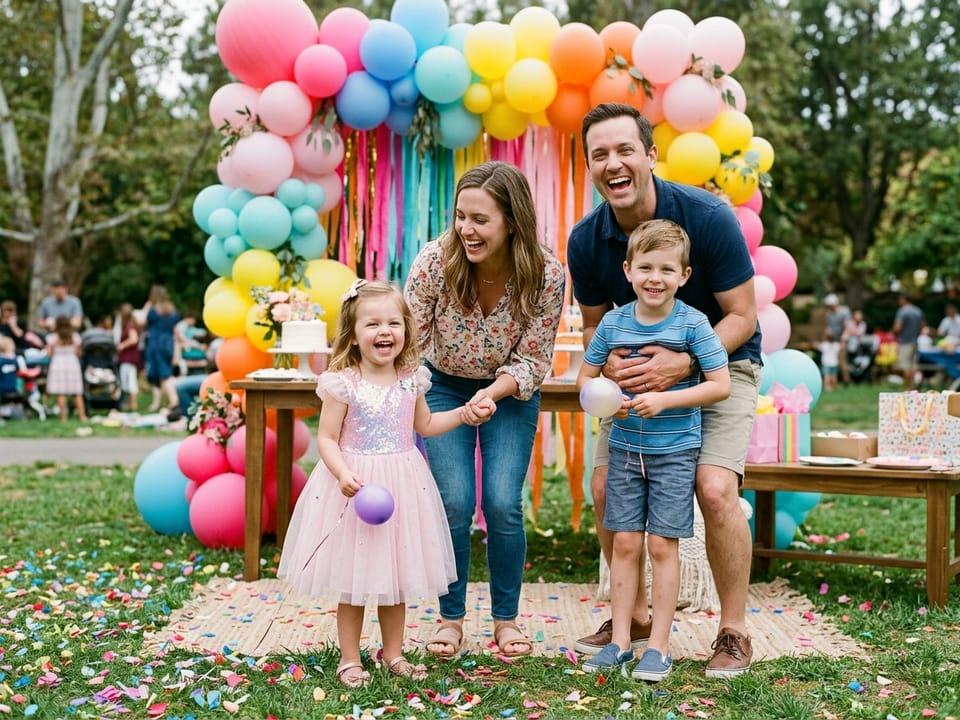
A smash cake for a 1-year-old should be small, made only from foods your child has already eaten without a reaction, and free of anything they could choke on: whole nuts, hard candy, marshmallows and inedible toppers. Sugar is the judgment call. Public health guidance in the US and the UK advises against added sugar at this age, so the sensible compromise is a smaller, less sweet cake rather than a big bakery one.
About four inches across is enough
A smash cake is a photo prop your child is allowed to eat. A round roughly 4 inches (10 cm) across and one or two layers high fits on a high chair tray or a cake board on the floor, is easy for small hands to break into, and leaves little to throw away. A 6-inch cake looks fuller in a wide shot, but most of it becomes leftovers. Keep the guests' cake separate so nobody has to eat around a toddler's handprints.
Height affects the photos as well. A tall stacked cake topples and turns into a heap before the first good frame. A short, wide cake with a soft frosting gives you the hands-in-the-frosting pictures people are hoping for. Whipped cream slumps quickly in a warm room, while firmer frostings hold their shape longer but take more prying open.
Use only ingredients your child already eats
An ordinary cake recipe contains several of the foods most likely to cause allergic reactions in young children. The NHS list includes eggs, cows' milk, foods containing gluten such as wheat, nuts and peanuts, soya, and seeds, especially sesame. Butter, flour and eggs alone cover three of those, and an almond-flour sponge or a praline filling adds a fourth.
The NHS advice is to introduce these foods one at a time, so you can spot a reaction. A smash cake breaks that rule if it's the first time your child has had egg or wheat, and it also makes a reaction harder to notice: redness around the mouth looks a lot like smeared frosting. Before you settle on a recipe, check every ingredient against what your child already eats, including the frosting, any food coloring and the decorations. If something would be new, try it on an ordinary day in the weeks before.
Timing matters too. Reactions usually start within minutes, the NHS says, but symptoms can take up to two hours to appear. Schedule the cake for a time when you'll be with your child for a couple of hours afterwards, not just before bed. Breathing problems or a swollen throat or tongue are signs of anaphylaxis, which is an emergency; call your local emergency number. If your child already has a diagnosed food allergy or eczema, or there's a family history of food allergies, eczema, asthma or hay fever, the NHS suggests talking to your doctor or health visitor before introducing allergenic foods.
Buying the cake? Ask the bakery for the full ingredient list, frosting and decorations included, and whether nuts are used in the same kitchen. If a photographer supplies the cake as part of a session, ask the same questions before the day, and bring your own if anything on the list would be new to your child. Studios handle the cake in different ways, which our guide to cake smash photographer packages compares.
What the guidance says about sugar
US and UK public health guidance is blunt on this. The CDC's infant and toddler nutrition pages say infants and young children have no room in their diet for added sugars. The NHS says babies don't need sugar, and advises avoiding food and drink with sugar or sweeteners for children aged 4 or younger; it also names cakes among the foods high in saturated fat not to give too often. Parents in Canada, Ireland and New Zealand should read their own government's infant feeding advice too.
None of that makes a first birthday cake forbidden, but it does argue for a small cake with less sugar, and for letting your child decide how much actually gets eaten. A fair amount usually ends up on the tray. Ways to cut the sugar include a sponge sweetened mostly with mashed ripe banana or unsweetened apple purée, a topping of plain whipped cream or thick plain yogurt beaten with cream cheese (if dairy is already familiar), or simply a normal recipe made at a quarter of the size.
Two swaps to avoid. Sweeteners aren't a workaround, because the NHS advises against them for young children along with sugar. And honey isn't a "natural" option before 12 months: the CDC and the NHS both say not to give honey until after the first birthday, because it can cause infant botulism. If your shoot falls a week or two before the birthday, the rule still applies on shoot day.
Keep raw egg, whole nuts and hard decorations off the cake
Cooked egg in the sponge is fine for a child who already eats egg. Raw egg is a different matter. The NHS advises avoiding raw eggs, including uncooked cake mixture, and says that in the UK only eggs with the red lion stamp can be given raw or lightly cooked. Some icings and mousse fillings use raw egg white, so outside the UK the simple rule is to choose a frosting that doesn't.
Then check the decorations against choking guidance. The AAP advises keeping high-risk foods from children until age 4 or older, and its list includes nuts and seeds, whole grapes, popcorn, marshmallows, hard, gooey or sticky candy, and raw fruit chunks such as apple. The NHS says whole nuts shouldn't be given to children under 5. On a cake, that rules out whole nuts, hard sugar pearls and candy pieces, marshmallow toppers and whole grapes as garnish.
Non-food decorations deserve the same scrutiny. Candles, plastic number toppers, picks and anything held up by a toothpick or wire should come off before the cake goes in front of your child. Light-up toppers and battery tea lights can run on small button batteries, which the AAP lists among the household items to keep away from young children. Keep your child sitting down while eating, too: the AAP says children shouldn't walk, run, play or lie down with food in their mouths, and an adult should stay close the whole time.
Bakery, box mix or from scratch
A bakery cake is the least work and often the neatest on camera. Ask for the smallest size they make, a plain or pale frosting, no decorations you'd have to pick off, and the ingredient list in writing. Prices vary a lot by area and by bakery, so ask for a quote for the smash cake on its own.
A box mix is baked, so egg in the batter isn't a concern, and the packet lists the ingredients, though a tub of ready-made frosting may add colorings and other things your child hasn't had. Baking from scratch gives you full control: you can halve the sugar, skip the coloring and use only familiar ingredients. Bake the day before so the sponge is cool and firm, then frost on the day.
Floor protection, light and the bath afterwards are in our guide to cake smash photos at home, and if you'd rather sidestep the sugar question entirely, there are cake smash alternatives built around fruit and pancakes.
The cake only has to be safe to eat
Your child won't remember how the cake tasted, and the camera can't tell a banana sponge from a bakery one under a layer of cream. What matters is that everything on the board is safe to put in a mouth, because it will go in one. Small, familiar, plainly topped and checked for choking hazards is the whole brief.
References