Shou Xian and the 4-Month Vaccines: Scheduling the Ceremony and Photos Around Shots in Taiwan
pokesta Editorial Team · Updated October 23, 2026
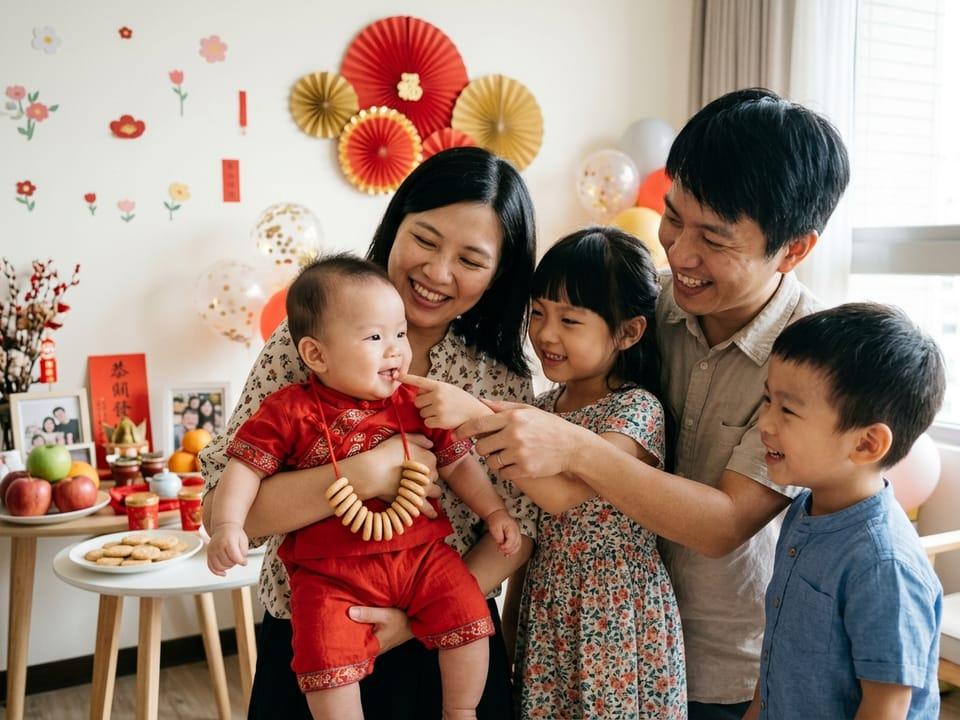
Four months is when Taiwanese families hold shou xian (收涎), hanging ring-shaped biscuits on a red string on the baby's chest so the drooling will settle, and it's also a vaccine visit. Taiwan CDC's current childhood schedule gives the second doses of the 5-in-1 vaccine and the 13-valent pneumococcal conjugate vaccine at four months. The easiest plan is to keep the vaccine on schedule and hold the ceremony and any photos away from the day of the shots and the two or three days after. The ceremony date is the one that can move, so book a studio only once the vaccine date is fixed.
The four-month visit: 5-in-1 and pneumococcal
Under the current schedule published by Taiwan's Centers for Disease Control (version 115.09, in effect from 1 October 2026), babies receive the 5-in-1 vaccine (DTaP-Hib-IPV, covering diphtheria, tetanus, pertussis, Hib and polio) and the PCV13 pneumococcal vaccine at two months and again at four months, with the third 5-in-1 dose at six months. BCG comes at five months, with five to eight months recommended.
In June 2026 Taiwan CDC announced that rotavirus vaccine joins the free childhood programme on 1 January 2027: an oral vaccine given at two and four months for the two-dose product, or at two, four and six months for the three-dose one. Until then, 16 cities and counties provide it through their own purchase or subsidies. From 2027, the four-month visit may mean two injections and one oral dose. Confirm the exact vaccines and date with your paediatrician or clinic.
Give the baby one to three days after the shots
Taiwan CDC's page on the 5-in-1 vaccine says that in the one to three days after the shot there may be redness, swelling and soreness where it went in, and occasionally fussiness, tiredness, poor appetite or vomiting, usually clearing within two to three days. Constant crying or high fever is less common. If the redness keeps spreading, a high fever lasts more than 48 hours, or there's a serious allergic reaction or marked distress, see a doctor promptly.
So the day of the shots and the next couple of days are when your baby is most likely to be clingy, feed less and still be sore. Passing them around a dozen relatives is hard on the baby and makes for difficult photos. If anything worries you, ask a doctor rather than guessing whether it's a vaccine reaction.
Keep the vaccine on time; move the ceremony
The Ministry of Education's Taiwanese Hokkien dictionary describes 收瀾 (siu-nuā, the Hokkien name) as a custom held when a baby has turned four months: the mother's family gives biscuits with a hole in the middle, strung on red thread and hung on the baby's chest to "collect the drool." It says "at four months" and names no particular day or hour, so the family can choose a day when everyone can come.
Vaccines have a schedule and minimum intervals and shouldn't move for a party. Taiwan CDC's page also notes that a baby with a fever or a moderate to serious acute illness should wait until stable before vaccination, and that call belongs to the doctor.
That leaves two workable orders. Hold the ceremony on a weekend around the four-month mark and get the shots a few days later, or get the shots first and wait until the baby has recovered, with at least a few days' gap. If the shots land on a Friday, pushing that weekend's ceremony back a week is kinder to everyone.
Studio, home visit or your own phone: which copes best with changes
Studio
Photographer at home
Your own phone
Rescheduling
Studio rules; harder close to the date
Photographer's rules and diary
Any time
Baby just vaccinated
Has to travel to an unfamiliar room
Stays home, less tiring
Stays home; stop whenever
Results
Most consistent light and retouching
Someone focused on photos
Window light and a phone
Best for
A retouched portrait
Large families
A simple record
Before you pay a deposit, find the rescheduling rules. One example, as listed by the Taiwanese photographer 揪影子快門 (Enjoying Shutter) in October 2026: non-wedding shoots such as baby sessions need a NT$2,000 deposit when the date is confirmed. Cancel 14 or more days ahead and the deposit is refunded minus a NT$15 transfer fee; between three and 14 days, the deposit is held for one reschedule within three months; within three days it is neither refunded, transferred nor usable for a new date. Force majeure allows free postponement; whether a baby's fever counts isn't stated, so ask. Rules differ; go by each studio's site and contract.
So fix the vaccine date first, then book the studio for a day at least a few days after it, and get the studio's answer on illness and rescheduling in writing. A studio earns its fee with lighting and retouching, which needn't happen on ceremony day. Our breakdown of shou xian studio packages compares plans. A home visit or your own phone means the baby doesn't have to go out in the days after the shots; the shou xian guide covers running and photographing it at home.
Drool is the point of the custom; fever is for the doctor
The blessing behind shou xian is that the drooling will ease. A wet chin and hands in the mouth are normal at this age; keep a few bibs ready and swap in a dry one before photos. But a fever, a baby who seems unwell or won't stop crying shouldn't be written off as teething or a vaccine reaction; call the doctor. Holding the ceremony a few days later takes nothing away from it.
While you wait, make a family portrait
If the ceremony and photos have to wait but relatives far away want to see the baby now, pokesta can turn the phone photos each of you already has into a shou xian family portrait with AI, the baby in red with a biscuit string on the chest. It's $1 per photo, and the first photo is free. It's a generated image, not a record of the ceremony; the real ritual can wait until your baby feels well. Try a free one with a recent photo.