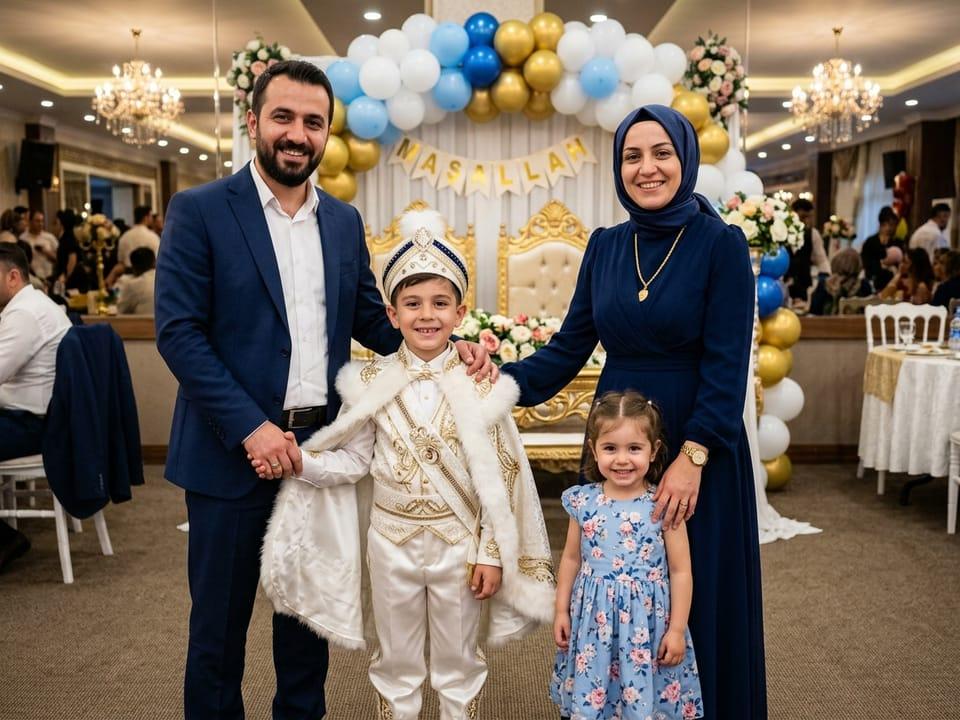
Sünnet Outdoor Photoshoot in Summer Heat: The Right Hour, Heat Warnings and Keeping a Boy in a Satin Cape Cool
pokesta Editorial Team · Updated November 3, 2026
In July and August, the average daily high is 29.7°C in Istanbul and 35.4°C in Gaziantep, according to Türkiye's State Meteorological Service (MGM), and the Ministry of Health has advised people not to go out between 10:00 and 16:00 unless they have to. Plan an outdoor sünnet shoot for the early morning or the last ninety minutes before sunset, keep it to 30–45 minutes, and put the cape and hat on only for the shots. If MGM issues an orange or red heat warning for your province that day, move the date, and agree in writing when you book that you can.
July and August are the hottest weeks of the year
Those averages hide the hot days. MGM's records show 40.6°C for Istanbul in July, and Gaziantep has reached 44.0°C in both July and August. A sünnet costume is built for looks, not for heat: a satin or velvet jacket, a cape over the shoulders and a hat, often in layers. A boy in that outfit standing on sunny paving stones heats up far faster than the adults around him in summer clothes.
If your celebration falls in the school holidays, the shoot will almost certainly land in these weeks. That doesn't rule out an outdoor shoot. It means choosing the hour carefully and building the plan around his comfort rather than the photographer's shot list.
Shoot early or late, and keep it to 30–45 minutes
The Ministry's heat advice is to avoid the hottest hours, 10:00 to 16:00, and to wear light-colored, loose clothing and a wide-brimmed hat. Both good photo windows sit outside those hours. Early morning, roughly the first two hours after sunrise, gives cool air and soft light. The last ninety minutes before sunset gives warm, low light, though walls and paving still hold the day's heat. Check the exact sunset time for your city the day before.
Then shorten everything:
Dress him in a light cotton T-shirt and shorts for the journey, and change into the costume at the location.
Put the cape and hat on only for the shots, and take them off between setups.
Stop in the shade for water every ten minutes or so, whether he asks or not.
Take the most important photos first, so the shoot can end whenever he has had enough.
Never leave him waiting in a parked car while the adults set up; the Ministry warns against leaving children in closed, parked vehicles.
Thirty to forty-five minutes is enough for full-length portraits, a few with parents and grandparents, and one or two with the staff and cape. Anything longer is for the adults' benefit. When you choose the spot, pick one with trees or a building's shadow close by, so he can rest between shots without a walk, and ask the photographer where the shade falls at your time of day.
Know the warning signs and stop at the first one
Acıbadem's guide to extreme heat lists babies and children among the groups at risk. The signs of heat stroke it gives include a body temperature of 38°C or more, a fast pulse, headache, dizziness, feeling dazed, heavy sweating or being unable to sweat, restlessness and thirst. If any of them appear, get him into a cool place straight away, take the costume off and seek medical help; in an emergency, call 112. No photo is worth carrying on for.
A flushed, crying boy who refuses to stand is often telling you the same thing before any thermometer does. Treat it as a cue to stop, not to coax.
Heat warnings: put a date-change clause in the contract
MGM issues weather warnings by province on a four-step color scale: green (no danger), yellow (low danger), orange (dangerous) and red (very dangerous), and heat (sıcak) is one of the warning types. Check the warning map the day before and on the morning of the shoot. On a yellow day, keep to the early slot and shorten the session; on an orange or red day, postpone.
That only works if the contract allows it. When you book, ask the photographer to write in that an orange or red heat warning for your province lets you move the date without losing the deposit. If they won't, think seriously about a studio instead.
Studio, outdoor photographer or your own phones in high summer
In July and August, a studio is the safe choice: indoors, short, and independent of the weather. An outdoor photographer is worth it if the place matters to you, provided you get the early slot and the weather clause. Your own phones are the most flexible of all: costume portraits on a shaded balcony at eight in the morning, and the party in the evening once the air has cooled. A professional still earns the fee for the crowded group photos at the party, which happen indoors anyway. For a full cost comparison, see studio vs outdoor vs DIY, and for the outfit itself, the guide to the sünnet outfit.
On a red-warning day, let the phones carry the portrait
If the forecast turns red in the week of the celebration, you don't have to choose between his health and the picture. pokesta creates a sünnet family portrait with AI from phone photos you already have, so a few quick snaps indoors can become the costume portrait afterward. It costs $1 per photo, the first is free, and the result is a created image rather than a record of the day. Try it with a picture of your son taken this week. Make a sünnet portrait without the heat