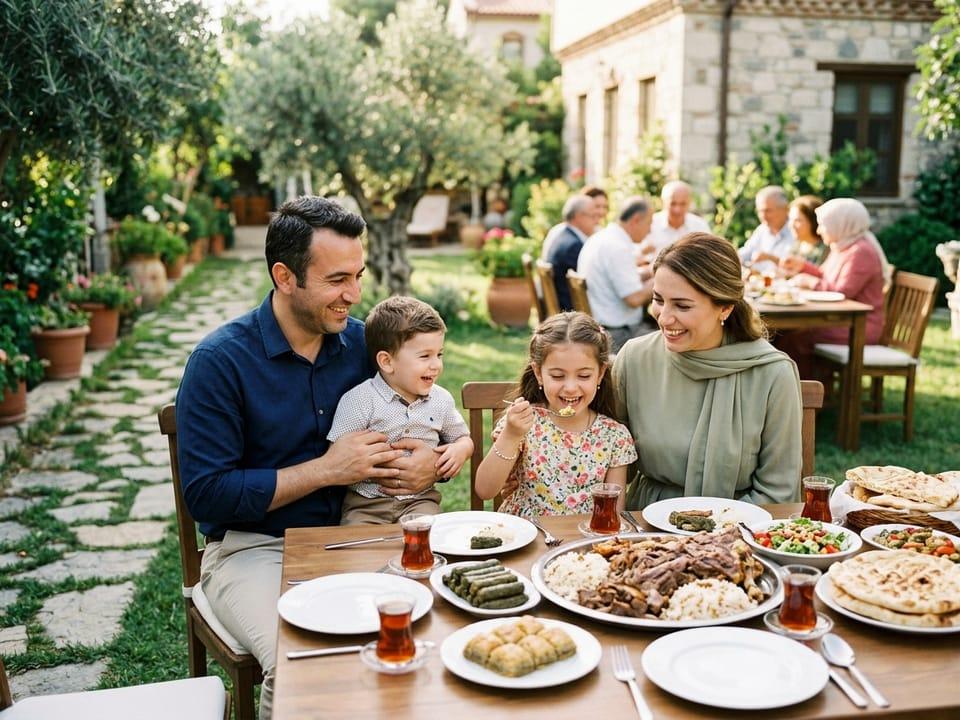
On the first day of Kurban Bayramı the morning belongs to the bayram prayer, then the sacrifice and the sharing of the meat, so it's rarely the moment for an unhurried family photo. Take the holiday-clothes picture on the evening of the arife, 15 May 2027, or during the visits on the second day, and keep the camera away from the sacrifice itself. If you'd rather your young children didn't watch, decide in advance where they'll be. Families who give their sacrifice by proxy (vekâlet) will find the first morning much quieter.
2027: bayram from 16 to 19 May, and the first morning is spoken for
In Türkiye, Kurban Bayramı, the Feast of Sacrifice, is a four-day public holiday, with the afternoon of the day before, the arife, off as well. According to Diyanet's calendar, the arife in 2027 is Saturday 15 May and the bayram runs from Sunday 16 to Wednesday 19 May. The holiday follows the Islamic lunar calendar, so check Diyanet's calendar for the dates in later years.
The bayram prayer is held at mosques shortly after sunrise; Diyanet's prayer-times service gives the exact time for your town. According to Diyanet's guidance, the time for the sacrifice begins once the bayram prayer has been performed and, in the Hanafi view, lasts until sunset on the third day. In practice many families sacrifice on the first day. The meat is then divided: Diyanet notes the Prophet's recommendation to give one part to the poor who couldn't sacrifice, share one with relatives, friends and neighbours, and keep one for the household.
So the first morning has men leaving for prayer, then hours of cutting, bagging and delivering, with the kitchen at full stretch. It's not the time to put a four-year-old in white and ask everyone to line up.
Keep the camera away from the sacrifice
The sacrifice is an act of worship. Diyanet's guidance stresses that the animal mustn't be made to suffer, that it should be done swiftly by someone competent with a sharp knife, that animals shouldn't be kept where they can see one another being sacrificed, and that the surroundings should be kept clean. Filming it doesn't fit that care, and posting it can upset relatives, neighbours and anyone scrolling past. Agree as a family beforehand: no phones at the sacrifice, nothing online.
Whether children see it is a family's own decision. If you'd rather the little ones didn't, plan it rather than improvising: a grandparent can take them to another room, to a park, or to a relative's house for an hour. Tell them in simple words what the day is about, sharing with people who have less. If a child does see it and asks questions, answer calmly and briefly. Diyanet's Kurban site also has a section on sale and sacrifice places, worth a look if you'd rather it happened away from home.
When to shoot instead: the arife evening or the second day
The arife evening is the easiest window. The bayramlık, the new holiday clothes, are ready, nothing has been creased yet, and the evening light at the front door or a west-facing window is soft. One full-length photo per child, one of the siblings together, five minutes.
The second day brings the visits to elders, and with them the hand-kissing greeting, small gifts of pocket money (harçlık) and the grandparents' sitting room full of people. That's when a group photo comes together naturally. For seating and how to catch the hand-kiss from the side, see Ramazan Bayramı family photos; if you're driving to the grandparents, the bayram road trip guide explains why the second morning works best.
Families who sacrifice by proxy
Diyanet's guidance confirms that a sacrifice may be made through a proxy, and that the proxy can be given verbally, in writing, by phone or online. It may be carried out in another city or abroad, though where there are people in need nearby, sacrificing locally is preferable.
The Türkiye Diyanet Foundation (TDV) explains that paying its sacrifice fee counts as giving the foundation the proxy, that donors can't choose the country or region, and that the whole animal goes to people in need. Obligatory sacrifices are carried out within the first three days, with an SMS confirmation. As of October 2026, its page listed 2026 fees of 18,000 TL for a sacrifice in Türkiye and 7,000 TL abroad; 2027 fees weren't yet published, so check the official site. For these families, the first morning after prayer is free, and it's a fine time for photos.
Studio, photographer or your own phone
|
Photo studio |
Hired photographer |
Your own phone |
| Cost |
Session fee plus prints, set by each studio |
Fee for time and travel |
Nothing extra |
| Children on a busy holiday |
Book before the bayram |
Day two, at the grandparents' |
Arife evening, any calm moment |
| Changing the date |
Rebook; check holiday opening |
Depends on the agreement |
Any day |
| Result |
Even light, retouching, prints |
Natural shots of the visits |
Depends on light and patience |
| Best for |
A portrait in new clothes |
Three generations together |
Quick, everyday moments |
A professional earns the fee when three generations are together or when you want prints for several households. Book a studio session before the bayram rather than on the first day, and ask a photographer to come on day two. Prices and cancellation terms vary by studio, season and package, so check each official site.
A bayram portrait without working around the sacrifice
If the holiday is too full to stage a photo at all, there's a calmer route. pokesta turns phone photos you already have into a Kurban Bayramı family picture with AI, with everyone in holiday clothes at a garden feast table or in a grandparents' sitting room. It's an image the AI creates, not a record of the day. It's $1 per photo and the first is free, so try it with a recent photo of your children while you're still working out the first morning.
References