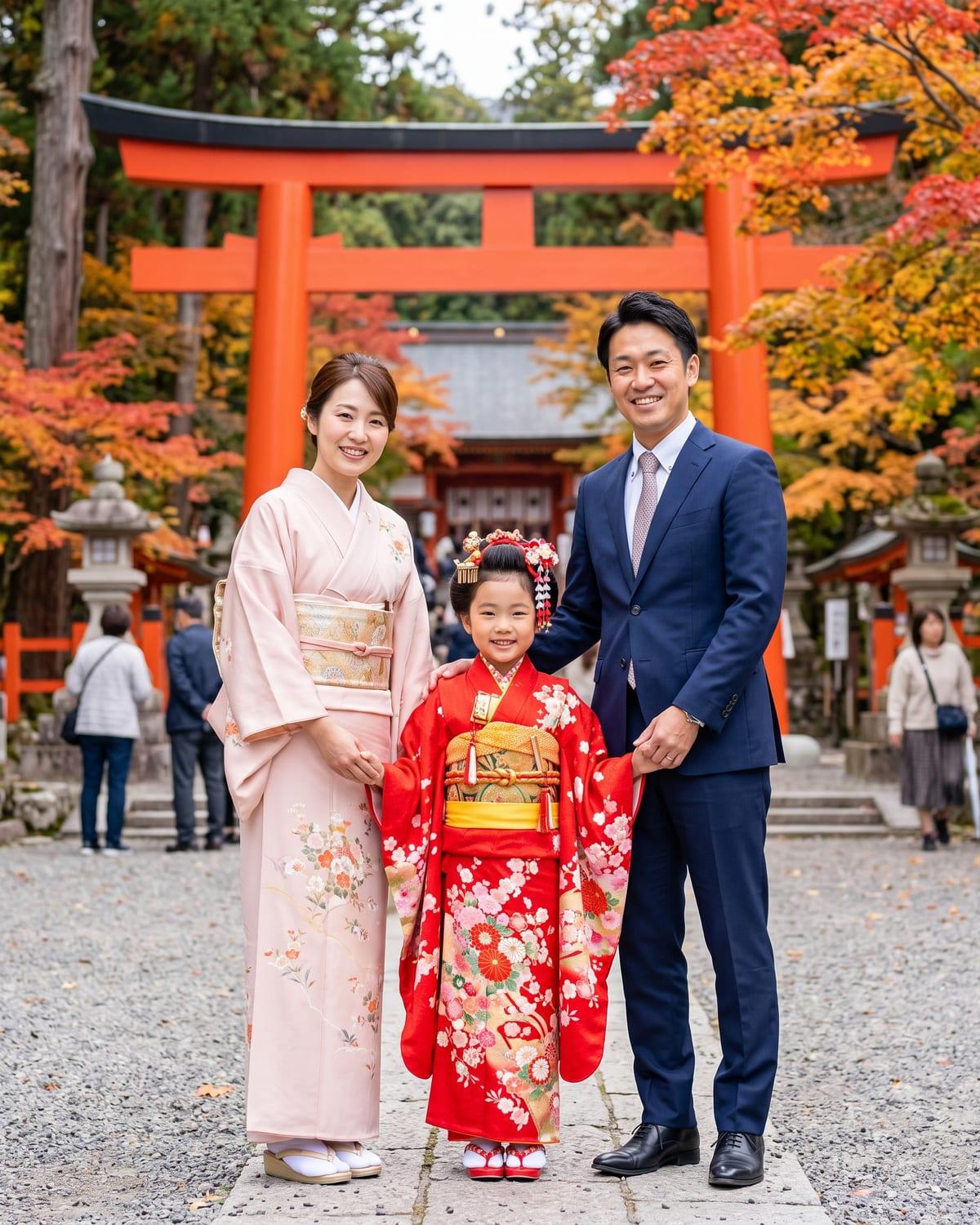
If your Shichi-Go-San photos aren't what you hoped for, the best time to say so is before you confirm your order. (Shichi-Go-San is the Japanese celebration for children aged three, five and seven, who dress up, often in kimono, and visit a shrine; many families also book a photo studio.) While you're still choosing, you can ask to see other shots or whether a few more can be taken. Once the order is confirmed, some studios, Studio Caratt among them, accept changes only on the same day, so starting over gets much harder (per each studio's official site, October 2026). If you raise an issue after delivery, check the retouching and reshoot rules first, then say exactly what you'd like fixed.
Break "I don't like it" into expression, pose and color
"It just isn't what I imagined" gives a studio or photographer nothing to work with, so start by pinning down what bothers you. It might be the expression: a stiff smile, closed eyes. It might be the pose: the obi pattern hidden by a sleeve, awkward hands. It might be color or brightness: skin that looks dark, a red kimono that looks dull. Or it might be small distractions such as stray hairs or a scratch on the face.
Each has a different fix. Expressions can only be solved by finding another shot or reshooting; retouching won't do it. Poses depend on whether extra shots are possible. Color and small distractions can sometimes be retouched. Write down the photo numbers and a one-line note for each, such as "soften the scratch on the left cheek" or "a little brighter overall," and the conversation moves quickly.
The gap often comes from a tired child. The longer dressing and shooting run, the more the later shots tend to show it. If you notice mid-session that an earlier smile was better, ask then and there whether you can take a break and try again. With an on-location photographer, ask to glance at a few shots on the camera screen between setups; you'll catch a mismatch in mood early.
While choosing, ask for other shots and a few extras
Before you order, you have options. If nothing on the selection screen works, ask whether there are other frames. A similar pose with a different gaze or smile sometimes turns up.
Reshoot rules vary by studio. Studio Caratt says that if shooting was difficult, for example because the child cried, it can reshoot or add shots within one month of the shoot date at most. Our article on when your child cries at the studio covers that situation.
Some studios let you choose at home. Life Studio makes the photos viewable on its member page on the day of the shoot, and products arrive about six weeks after you finish selecting. If you can choose at home, don't decide on the spot; look through them together as a family. For choosing within a budget, see selecting Shichi-Go-San photos on a budget.
After you confirm the order, taste alone rarely changes anything
Some studios set firm limits on changes after ordering. Studio Caratt accepts changes on the day of the order, but from the next day it takes neither cancellations nor changes, and once an online order is confirmed you can't reselect photos. Life Studio leaves product design to its designers and states that it won't remake a product because it differs from what you imagined.
Defects are a different matter. Studio Alice offers a quality guarantee of one year and six months from the order date and will repair or replace items with defects or errors in the order. For digital files, it asks you to get in touch within seven days of receiving them. Life Studio likewise asks families to open and check products within a week of delivery. So open everything as soon as it arrives and check that the photos match your order and nothing is damaged.
What retouching can fix, and where to turn if you're stuck
Studios that retouch usually charge for it. Studio Caratt handles scratches and bruises with photo correction at 2,200 yen (tax included) per shot, depending on the work. The on-location service fotowa says its fee doesn't include image editing such as individual skin retouching, compositing, background removal or cropping, so if you want any, ask the photographer before booking. Wherever you go, ask whether pricing is per shot or flat and how long it takes, to avoid surprises.
If you've checked the rules and still can't reach agreement, Japan's consumer hotline, 188, directs callers to a nearby municipal or prefectural consumer affairs center. Consultations are free, though call charges apply.
Studio, photographer or DIY: how easy is a do-over?
To avoid the same disappointment next time, compare how each approach handles a second try.
|
Photo studio |
On-location photographer |
Do it yourselves |
| How cost works |
Session fee plus products |
Time-based fee with digital files |
Just equipment |
| Reselecting or reshooting |
Easier before ordering; some set a reshoot deadline |
Usually a one-time shoot; ask about editing |
Reshoot as often as you like |
| Child's mood and health |
Later shots suffer if dressing runs long |
A change of scene helps, but heat or cold applies |
Shoot only when they're cheerful |
| Changing the date |
Depends on the studio |
Some services change dates for free |
Change any time |
| Finished photos |
Controlled lighting, consistent color |
Family at the shrine or among autumn leaves |
Less polished, everyday expressions |
A studio is still clearly worth it for some things. Outfits that depend on professional dressing and hair, like a seven-year-old's obi bow or an updo in a traditional style, are hard to recreate yourselves. A big group photo with grandparents is also safest under studio lighting. If expression is your only complaint, you can keep the studio portrait as it is and add everyday smiles yourselves on the shrine day or at home.
One more photo, made from pictures you already have
Maybe the reshoot deadline has passed and the kimono has gone back, yet you still want a kimono portrait with the smile you love. pokesta can create a Shichi-Go-San portrait with AI from a favorite phone photo. It's a generated image based on your picture, not a record of the day, so keep it alongside your real photos rather than in place of them. It costs $1 per photo and you can do it from home, and your first photo is free. Pick the expression you like best and create a Shichi-Go-San photo.
References