
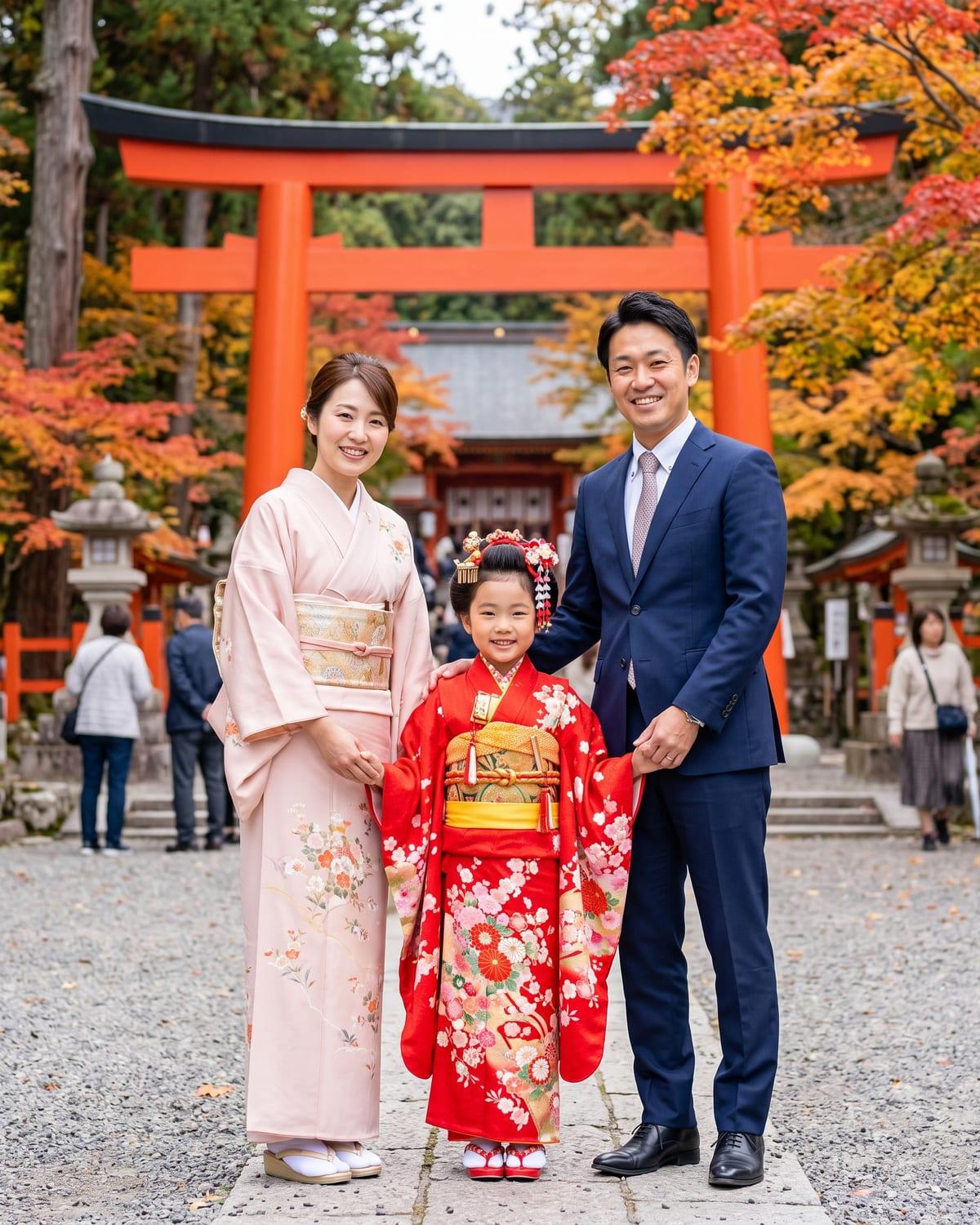
If your child starts crying during the Shichi-Go-San blessing (Shichi-Go-San is the celebration for children aged three, five and seven; the blessing, or gokito, is a prayer ceremony led by a Shinto priest inside the shrine hall), the least stressful move for everyone is for one adult to pick the child up, step out quietly, and come back once things calm down, following the priest's or shrine maiden's lead. How long the blessing takes depends on the shrine: Hakusan Shrine in Niigata City says about 20 minutes once you enter the main hall, and Nogi Shrine in Tokyo says about 30 minutes from reception. None of the shrine websites we checked explained what to do if a child cries, so it's worth asking at reception.
A 20 to 30-minute ceremony, shared or for your family alone
The Association of Shinto Shrines describes Shichi-Go-San as a rite of passage in which families celebrate a child growing up safely, thank the local guardian deity, and pray for healthy growth ahead. The blessing is at its heart. At Hakusan Shrine, a large drum sounds as you enter the main hall, followed by purification, a prayer in which your child's name is read out, a sacred dance with bells by a shrine maiden, and an offering of a sacred branch called tamagushi with two bows, two claps and one bow. From reception to the end can take up to about 40 minutes, and families share the ceremony with others.
Shrines also differ on whether your family has the blessing alone or with others. Nogi Shrine holds blessings one group at a time, gives priority to reservations, and says waits are about 20 minutes even when busy. Akasaka Hikawa Shrine takes reservations, holds blessings every 15 minutes, and combines families when it's crowded. Hikawa Shrine in Saitama (Musashi Ichinomiya) takes no advance bookings, holds blessings every 30 minutes (every 20 when busy), and calls families from the waiting area by number. Tokyo Daijingu normally doesn't hold individual blessings, so Shichi-Go-San families join people there for other prayers.
In a shared blessing, other children's names are read too, so the quiet stretch is longer. When it's just your family, the only people you need to mind are the priest and shrine maiden. Check which format applies, and roughly how long it takes, when you book or sign up.
Before tears: timing, snacks, kimono and a heads-up
The likeliest triggers for a three-year-old are being sleepy, being hungry, a tight kimono, and having to sit quietly somewhere unfamiliar. Deal with what you can ahead of time.
First, timing: choose a booking or arrival time that doesn't clash with nap time. Next, food: give your child a light snack before reception. If you eat in the waiting area, a Studio Alice column on Shichi-Go-San suggests bite-sized snacks that don't leave sticky fingers and drinks with a straw, which are harder to spill. Then the kimono itself: after dressing, sit your child down and check the sash and ties aren't too tight.
Last, give a heads-up. The night before, tell your child what will happen: a big drum, their name being called, bells jingling. Knowing what's coming makes sudden sounds less startling. With a five- or seven-year-old, give an end point too: "We'll sit for about 20 minutes, then we'll take a photo with your chitose-ame," the long red-and-white candy sticks of Shichi-Go-San. While you wait, you can stroll the grounds until your number is called, and find the nursing and changing areas in advance. Akasaka Hikawa Shrine has space for nursing and changing on the first floor of its shrine office, and Nogi Shrine offers a nursing room in its Nogi Kaikan hall. For the rest of the bag, see a Shichi-Go-San day checklist.