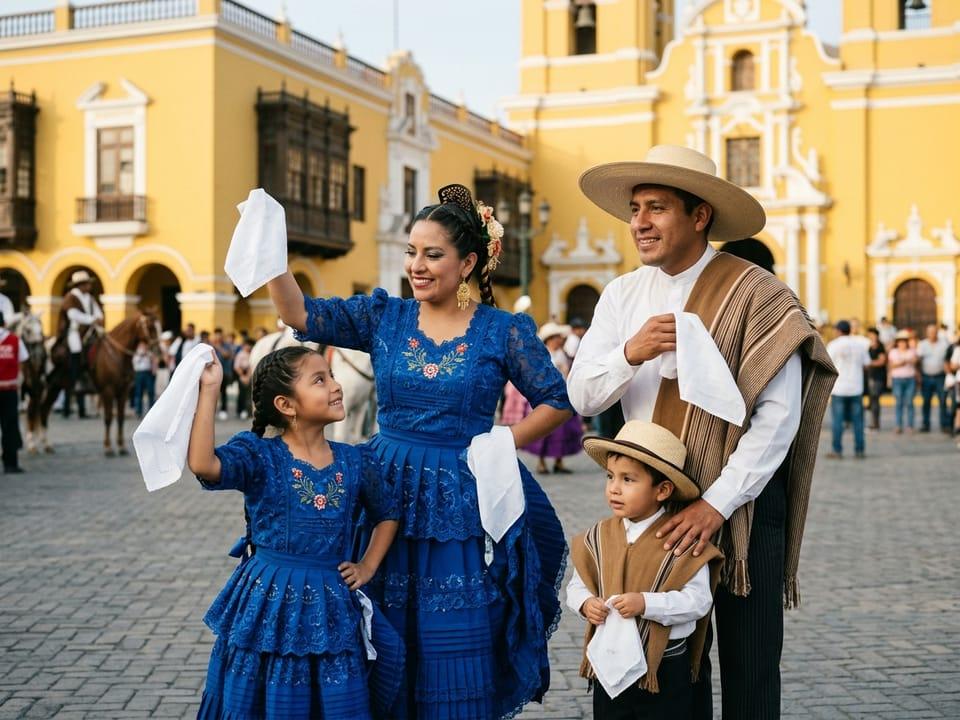
A marinera contest day is long because the contests are big. At the Club Libertad's national contest in early 2026, more than 2,000 couples registered, and the last day began at 10 a.m. with the Master and Pre Infantes categories before working through several finals to the Campeón de Campeones. Plan for a full day of waiting in summer heat, take the portraits before your child is called while hair and energy are still fresh, and keep a barefoot girl's soles covered until she steps onto the floor.
The schedule runs long because every category dances in rounds
The Club Libertad's contest, which began in Trujillo in 1960, has been held in Callao in recent years. The 2026 edition ended on February 1 at the Polideportivo Callao, with categories from Pre Infantes and Infantes through Noveles, Infantil, Junior, Juvenil, Senior, Adultos and Master. Couples who qualify move from one final to the next, so a heat that went well can mean a second and third wait. As of October 2026, the club's website says the next season's contests, rules (bases) and registration dates will be published soon. Check the venue and your child's category there before booking anything. Trujillo's city government runs its own February contest, Trujillo es Marinera, and academies and regions hold smaller ones. Each sets its own schedule.
The official programme gives start times, not a promise that your child will dance at a certain hour. Ask the academy teacher, who has usually been through it before, how late the infant categories tended to run last year.
Pack for a full day in summer heat
January and February are summer on Peru's coast. In Trujillo the average high is about 27°C in January and 28°C in February, and an arena full of people feels warmer than that. Pack as if you won't leave until the evening:
- Water, plus a snack that won't stain the costume
- A light shirt or robe to wear over the costume while waiting
- Hairpins, hair spray, a comb and spare elastics
- Makeup for touch-ups and wet wipes
- Socks and slip-on sandals for a barefoot dancer
- A small towel and plasters for blisters
- A fan or a hat for any queue outside
Watch for heat exhaustion: tiredness, dizziness, headache, nausea, heavy sweating with pale, clammy skin. Move your child somewhere cool, give water and loosen the costume. If they don't recover quickly, get medical help instead of waiting for the next round.
Nerves settle when the waiting has a routine
For a small child, the judges may matter less than the noise, the crowd and not knowing when their turn will come. Walk the venue together when you arrive: where the toilets are, where the category is called, where the family will sit. Agree on a quiet corner where your child and their partner can run through the opening salute once or twice. After that, stop rehearsing.
Decide before the day what happens afterwards, whatever the result: a meal, an ice cream, a call to grandparents. A child who knows the day ends well regardless dances more freely. And keep your own face calm when the scores go up.
Bare feet: keep the soles covered until the call
In the marinera norteña, the man wears shoes and the woman dances barefoot. Experienced dancers' soles toughen with years of practice, but a four- or six-year-old's feet haven't had that time. Keep socks and sandals on until the last moment and put them back on as soon as she comes off.
When you arrive, look at the dance floor if you can. If you notice loose tape, a splinter or a slippery patch, tell the staff rather than hoping it gets fixed. After each round, check her feet. Blisters come mostly from friction. Keep a blister clean, cover it with a soft plaster or padded dressing, and don't pop it or peel the skin. A blister that is very painful, hot or filled with yellow or green pus needs a doctor. Ask the teacher before the contest whether a plaster on the sole is acceptable on the floor.
Take the portraits early and decide where the money goes
Portraits are best taken before the call, when the hair is neat and the handkerchief is clean. A corner with a plain wall in the warm-up area is enough. Action shots from the stands are harder; that's where an event photographer, if the contest has one, earns their fee. Here's how the three options compare for a long contest day:
|
Event photographer at the contest |
Studio session on another day |
Your own phone on the day |
| Cost logic |
Per photo or per pack |
Session fee |
Free |
| Child's mood |
Captures the real heat, nerves and all |
Calm, rested child |
Depends on the wait |
| Rescheduling |
None |
Studio's rules |
None |
| Result |
Close action shots from the floor's edge |
Even light, clean costume |
Portraits yes, action limited |
What to buy from event photographers is covered in our guide to marinera competition photos. For a calm full-length portrait, a separate session works better, and studio, outdoor and phone options are compared here.
A finished marinera portrait, whatever the scores say
Scores fade; the photo of a child who danced anyway stays. If you'd like a polished family portrait in marinera dress as well, pokesta can create one with AI from phone photos you already have, on Trujillo's Plaza de Armas or in a hacienda courtyard. It's $1 per photo and your first photo is free, so try it with a picture from contest day. It's a created image, not a record of the contest, so keep the real photos too.
References