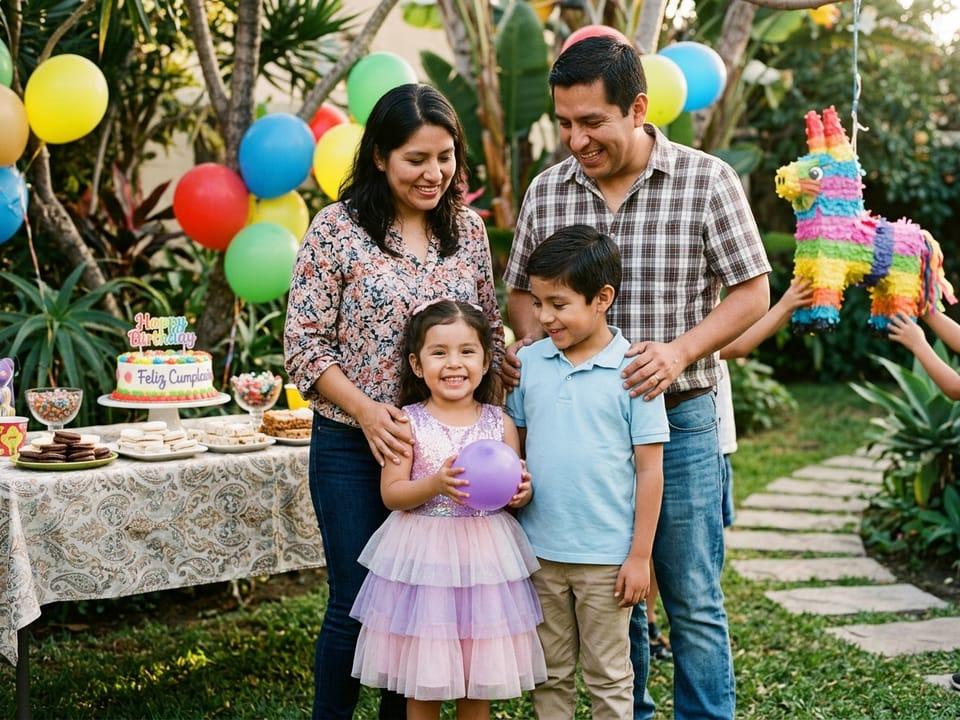
A one-year-old who screams at the clown is behaving normally. Wariness of unfamiliar people is common from about six months to three years, and a painted face with a microphone and loud music is about as unfamiliar as it gets. The show infantil is really for the older children at the party, so plan around that: take the family photo and the cake picture before the show starts, ask the animator to keep characters at a distance and the music down, and let your child watch from a parent's arms.
The show is for the guests; your one-year-old is the host
A typical Lima show is built for children who can run, follow instructions and shout answers back. Show Happy Kids, for example, lists its basic show as of October 2026 from S/590, or from S/750 with sound equipment: 60 minutes with one animator and a production assistant, group games and dances, props for the children, a "momento de fotos y abrazos" (photos and hugs), and a finish with Happy Birthday and the piñata. Characters such as Spiderman, Disney princesses or Plim Plim can be requested, and the price rises with live characters and extra animators. Prices vary by company and date, so confirm with the provider.
None of that needs the birthday child to take part. At one, children don't play the games or copy the dance moves, and the piñata means nothing yet. Older cousins and friends' children are the real audience. Once you see it that way, you can stop trying to get the baby onto the stage and start planning where the baby will be instead.
Why the clown sets off the tears
Several things happen at once. A stranger comes close, fast, often bending down to face level. The face is painted, or hidden inside a costume head bigger than a parent's. The music is loud and starts without warning. The room is full of excited children, and by mid-afternoon the baby may be past a nap. The NHS notes that babies at this age can feel unsafe or upset in new situations or with new people even when a parent is right there. The crying doesn't mean something is wrong with your child. It means your child is noticing everything.
What usually makes it worse is being handed over: to a grandmother so the parents can watch, or to the clown for a photo. Keep your child with the adult they're most comfortable with for the whole show.
Take the family photo and the cake picture first
Many shows end with the birthday song, so the cake photo tends to land at the worst moment, after an hour of noise. Move the important pictures to the start. Once guests have arrived and the baby has eaten, gather the family for one portrait in front of the dessert table, then photograph your child next to the torta with the candles lit, even if you sing properly later. Clothes are clean, faces are fresh and nobody has cried yet.
If you're hiring a photographer, give them this order in advance. If you're relying on phones, assign one relative to these fifteen minutes. Our comparison of a studio session, a party photographer or doing it yourself explains why the minutes around the cake matter more than the hours around them.
What to agree with the animator beforehand
Animators adjust shows all the time; you just need to ask before the day, not mid-scene. A short message covering these points is enough:
- No clown or costumed character walking right up to the birthday baby, and no surprise entrance aimed at the baby.
- The baby watches from the side with a parent and isn't called to the centre.
- Speakers placed away from where the family sits, and the volume kept moderate.
- During photos and hugs, the older children go first; the baby joins only if relaxed.
- A gap left for the cake if you've moved it.
For volume, the World Health Organization offers a simple test: if you have to raise your voice to be heard by someone an arm's length away, it's too loud. It also points out that sound gets weaker as you move away from the source, and recommends resting your ears in a quiet place for 10 minutes every hour in loud settings. A bedroom or the back patio works as the quiet room.
During the show: hold your child, sit at the back, leave freely
Sit at the side or the back, near a door, with your child on your lap or in your arms facing you. Bring a familiar toy or blanket. From there your child can look at the show and then turn into your shoulder when it gets too much, which is exactly what you want. If the crying doesn't settle after a minute or two, go to the quiet room and come back later, or not at all. The older children won't notice.
Photos with the clown are worth taking only if your child reaches out. Otherwise, take them with the older siblings and cousins, and keep the baby's pictures for the moments you planned at the start. A photobooth or a DIY backdrop set up away from the speakers gives the family a calmer corner for photos too.
The picture you imagined can still exist
What most parents want from the party is one image: the birthday child, calm, with the family around the cake. If the day doesn't produce it, pokesta can make one with AI from phone photos you already have, in a party setting with balloons and a piñata, for $1 per photo with the first photo free. It's a made image, not a record of the afternoon, but it can include the grandparents who couldn't come. Create one from a recent photo of your child before the party, and you'll know whether you still need to chase that shot on the day.
References