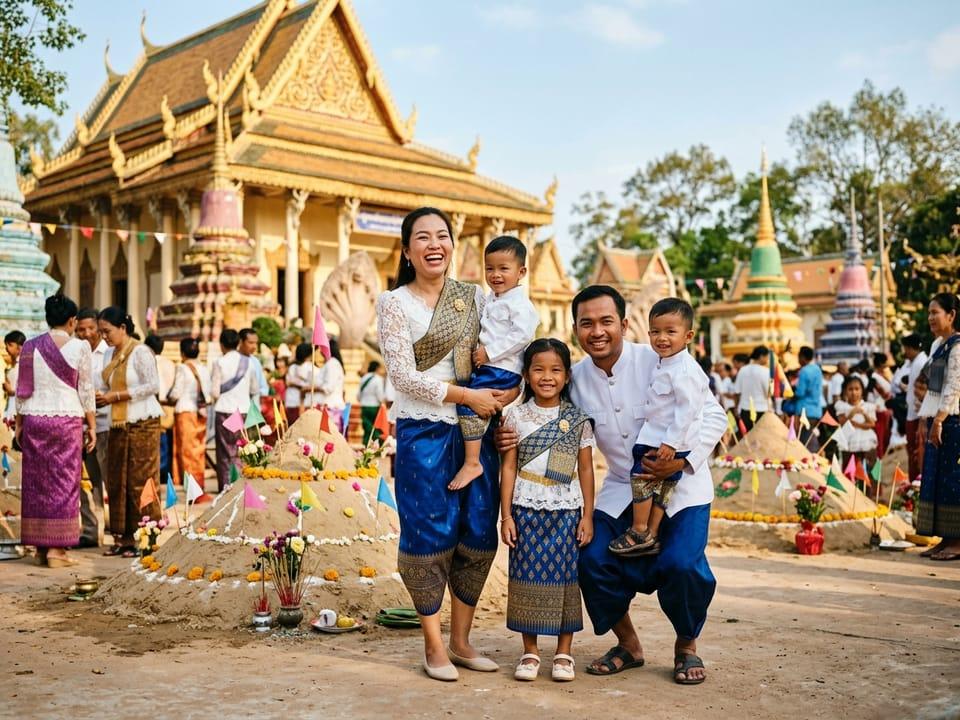
The safest plan comes down to order: take the family photos in silk in the morning, before anyone fills a bowl, then change into clothes that can get soaked. Water and powder really are part of the holiday. The custom of Srang Preah involves pouring water, or water mixed with chalk powder, over elder relatives and others, and silk is much more fragile when it's wet. If a splash does land, blot it straight away, and if the sampot is rented, read the shop's damage terms before you leave with it.
Water belongs to the blessing, not to strangers in the street
On Veareak Laeung Sak, the third day of Choul Chnam Thmey, families wash Buddha statues and their elders with perfumed water, and by washing their parents and grandparents, children receive their good wishes. The pouring is mostly done by the younger generation, and the water is sometimes mixed with chalk powder. So a little water at home or at the pagoda is the tradition itself, and a grandparent in good silk can expect to be part of it.
Throwing water and powder at people in the street is a different matter, and authorities have discouraged it for a long time. In 2007 the Cambodia Daily reported that the government had been cracking down on water bombs and talcum powder fights. In 2023 the education minister advised students at all public and private schools not to join water fights with squirt guns and coloured powders, according to the Phnom Penh Post. For 2026, Cambodianess reported in March that provinces were planning smaller Sankranta celebrations and that water and powder throwing would be prohibited. Rules change from year to year, so check what your city or province announces before the holiday. Even with a ban in place, a neighbour's child with a bucket is likely enough that your best clothes shouldn't be outside when it happens.
Shoot in silk first, then change for the water
Get dressed early, while the air is still cool, and take the formal photos before anything wet comes out: the group in front of the house, a portrait with the grandparents, the children at the sand stupas in the pagoda grounds. Our Khmer New Year family photos guide covers composition at the pagoda and coordinating colours.
When it's time to bathe the elders, decide in advance who will get wet. The grandparents receiving the water and the children pouring it can change into cotton first, while one adult stays in silk, stands well back and takes the pictures. Shoot from the side so the pouring hands and the elder's face fit in one frame. Put phones in a waterproof pouch, and keep a towel within reach of whoever holds the camera.
Powder brings its own problem. Mixed with water, chalk turns into a thin liquid plaster that can settle into the weave and show up white on dark silk. If powder lands on dry fabric, shake it off outdoors before it gets damp.
If silk gets splashed, blot now and let a cleaner finish
Tide Cleaners, a dry-cleaning service, notes that silk is much more fragile when wet, but that water won't necessarily ruin it. Dab the spot with a clean cloth rather than rubbing, because rubbing spreads the mark and roughs up the fibres. Act quickly, since a stain is harder to remove once it has dried. Then check the care label. If it says dry clean only, believe it: washing some silk garments can ruin them beyond repair. Keep bleach well away. Tell the cleaner it was water with chalk powder.
A rented sampot: read the damage terms before you go
Every shop sets its own terms, so ask before you pay. How much is the deposit, and is it cash or an ID card? Does a water mark or powder residue count as damage, or only tears and stains that won't come out? Is cleaning included in the fee? Who decides, and by when must the costume be back? Photograph it front and back when you pick it up, so there's no argument later about marks that were already there. If the answers leave you uneasy, wear the rented piece only for the morning photos and return it before the splashing starts.
Studio, hired photographer or your own phone
|
Studio before the holiday |
Photographer on the day |
Your own phone |
| Cost |
Session fee; ask if costume is included |
Photographer's time and travel |
Nothing extra |
| Water and powder |
No risk before the holiday |
Low if the shoot ends early |
You choose the timing |
| Children and heat |
Air-conditioned, easy breaks |
April heat outdoors |
Short sessions at home |
| Changing the date |
Depends on the studio's terms |
Holiday dates are fixed |
Any morning |
| Result |
Costume, makeup and light done for you |
Real moments of the day |
Natural, a little uneven |
| Best for |
Formal portraits in silk |
Families who want the pagoda morning |
Families who know the routine |
A studio session before the holiday is the cleanest way to keep good silk away from water altogether. It's still worth paying for when you want professional hair and makeup, a properly wrapped chang kben, or three generations in one formal frame. A photographer booked for the morning of the holiday captures what actually happens, but book an early slot and agree that the session ends before the water play. With your own phone the rule is the same: be done by mid-morning.
A portrait in silk that never goes near a bucket
If the only thing you need the silk for is the photo, there's an easier route. pokesta can make a Khmer New Year family portrait in sampot with AI, from phone photos you already have, so no costume has to leave the rack. It's an image created from your photos, not a record of the day. It costs $1 per photo, and the first one is free, so try it with a recent picture of your child before you put down a deposit on a rental. If you'd rather own the clothes, our guide to renting, buying or tailoring a sampot compares the costs.
References