
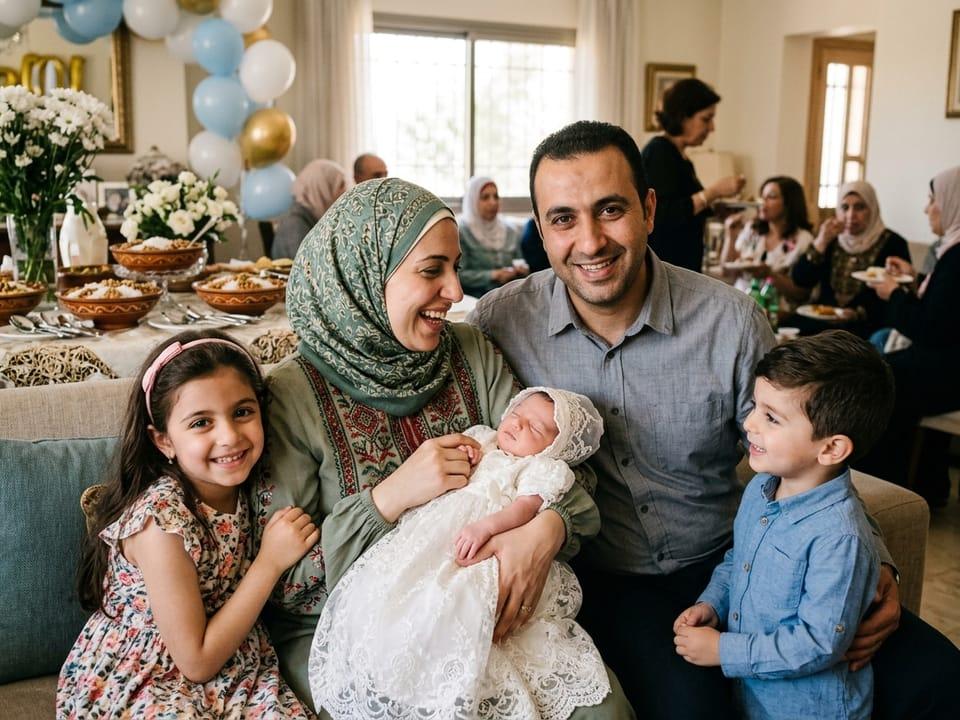
A newborn who stays awake or cries through part of a photoshoot is normal, and newborn studios plan for it. That is why sessions in Amman are booked for two to four hours: feeds, nappy changes and settling are part of the time, not an interruption to it. Feed your baby fully just before the first setup, keep them warm, and start with the photos of your baby in your arms. If deep sleep never comes, wide-eyed portraits and parent-and-baby shots are still a true record of those first days.
Sessions run two to four hours because feeds are part of the plan
Take Soul Studio in Dabouq, one of the Amman studios that publishes its newborn packages. As of October 2026, its Newborn Classic lasts two to three hours with three setups, and the Newborn Special lasts three to four hours with five. Both include mum, dad and siblings, and the studio recommends booking for the first 6 to 15 days after birth, which it calls a baby's sleepiest days. Its page does not mention overtime charges, so if your baby needs a long feed in the middle, ask in advance how the studio handles running over. Packages and terms change, so check the studio's own site before you book.
The length makes sense once you look at how newborns sleep. The American Academy of Pediatrics notes that newborns sleep about 16 to 17 hours a day, but often only one or two hours at a stretch. Breastfed babies usually feed about every two hours, and formula-fed babies every two to three. In a three-hour session, expect at least one feed, probably two. When the photographer stops so you can feed, the session is going as planned.
A baby who wakes up is usually hungry, cold or being moved
Most wake-ups at a shoot have an ordinary cause. Hunger comes first, and crying is a late sign of it; earlier cues are lip licking, sticking the tongue out and turning toward your chest. Feed when you see those, rather than waiting for the cry, because a baby who is already screaming takes longer to settle. Wind is next, so burp well after every feed, and check the nappy before each new setup.
Cold is the third. Newborn photos often show a baby wrapped lightly or partly undressed, and a newborn loses warmth quickly, which is why newborn photographers tend to keep the room warm. Overheating is a risk too. A US news report on newborn photo safety, which quotes a hospital neonatologist, notes that a baby wrapped in too many blankets can get too warm, and that if the air conditioning is turned up during the session, the baby should have an extra layer. Ask the studio how it keeps babies warm, and check your baby's neck and back yourself.
The last cause is movement between setups. Move your baby when they are in deep sleep, with slow breathing and floppy arms, keep one hand on their chest during the transfer, and give them a minute before the photographer starts. The neonatologist's warnings in that report apply to every pose: a newborn can block their own airway if the head drops forward, and a baby on a raised surface has to be secured so they cannot roll off, with someone within arm's reach the whole time.