
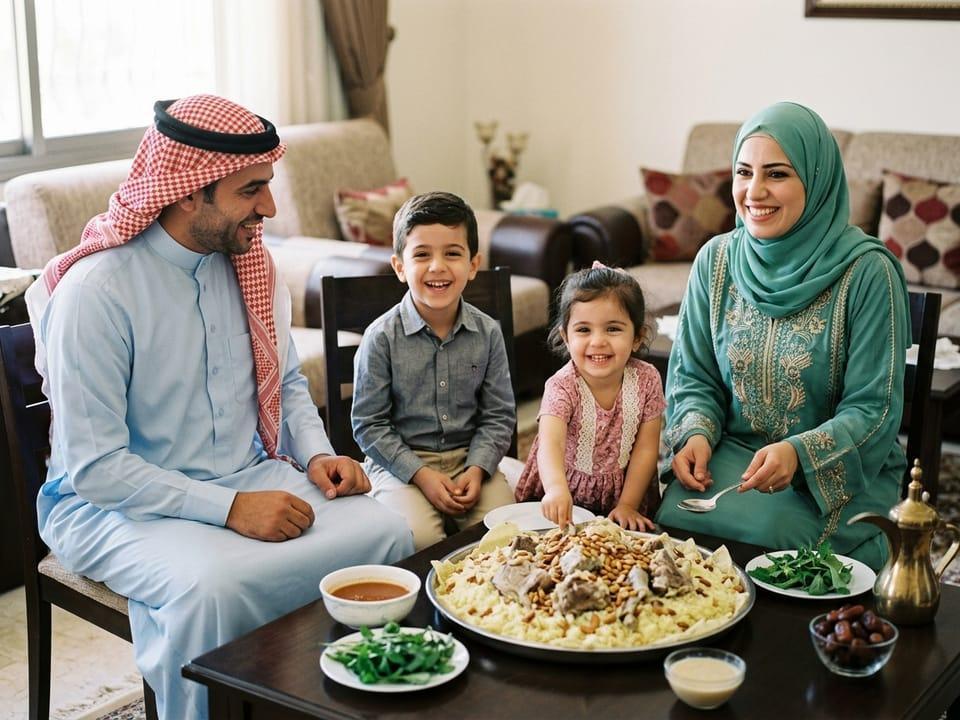
On Eid al-Adha, the simplest rule for photos is that the sacrifice itself is never photographed and never posted, and the pictures you keep come from the rest of the day: the family dressed for the Eid prayer, the mansaf table, and the grandparents with the grandchildren. Decide before the holiday whether your young children will be anywhere near the sacrifice, and tell them in plain words what it is. In 2027 Eid al-Adha is expected around 16 May, when Amman's average daytime high is already about 26 to 28°C, so take any outdoor photos early in the morning.
What the sacrifice morning looks like now
Eid al-Adha falls on the 10th of Dhu al-Hijjah and marks the end of the Hajj. It remembers Abraham's willingness to sacrifice his son, and the sacrifice, the udhiyah, is offered after the Eid prayer. The meat is usually divided into three parts: one for the household, one for relatives and friends, and one for people in need. The date depends on the sighting of the new moon; Office Holidays lists 16 to 20 May 2027 as the holiday in Jordan, and the government announces the official days.
In Amman, the sacrifice is not something to do in the street or the yard. In 2020 the Greater Amman Municipality said it would not allow sheep to be slaughtered outside designated locations or by unauthorised people, so a family that wants to be present goes to a licensed site. Other families hand the task to a butcher or a charity. Tkiyet Um Ali, a Jordanian charity, offers an udhiyah performed abroad for 155 JOD as of October 2026, in line with a fatwa from Jordan's General Iftaa Department; the meat is cut, frozen and sent to families in need in Jordan. Rules and prices change from year to year, so check GAM's announcements and the charity's own page before Eid.
For photos, this changes the shape of the morning. If the sacrifice happens somewhere else, or not in front of you at all, the hour after the Eid prayer is free for family pictures.
Talk to children before the day, and give them somewhere else to be
Families differ on whether young children should watch, and there is no single right answer. What helps is deciding as a family a few days before, so nobody argues about it on the morning with a frightened child in the middle. Older children can be told what happens and why: that the feast remembers Abraham's trust in God, and that a large share of the meat goes to people who cannot buy it. Keep it short and calm, and answer the questions they actually ask.
If you go to a licensed site, think about whether a toddler needs to come at all. Very young children can stay home with a grandparent or an older cousin, with a job to do, such as laying out the coffee cups or helping to set the table. If a child who does come becomes upset, take them away without fuss and without making them feel they failed.