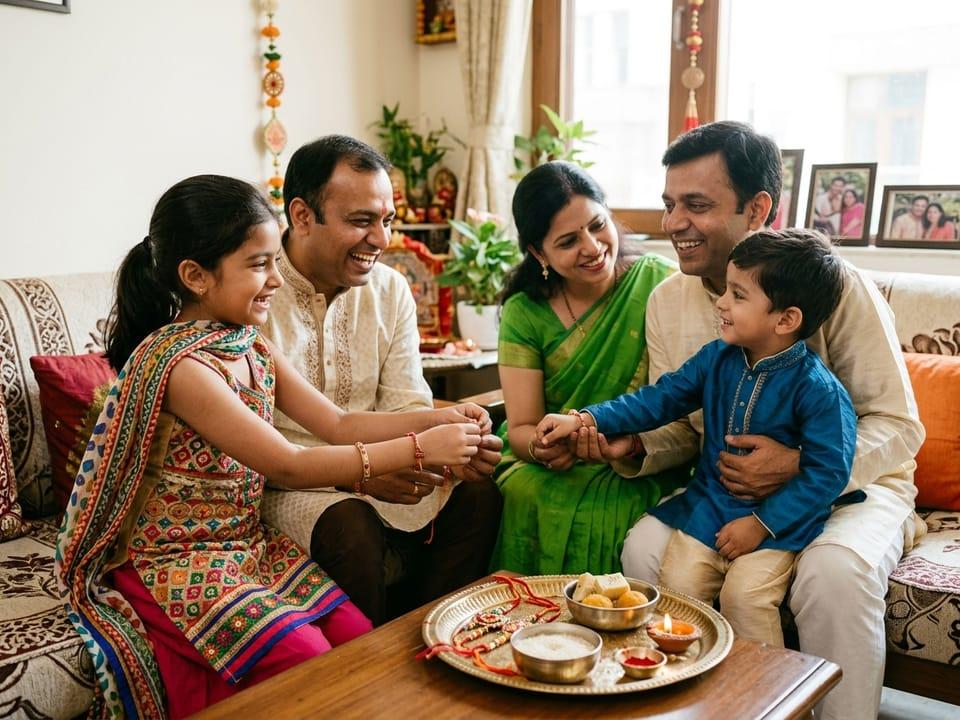
Raksha Bandhan 2027 falls on Tuesday, 17 August. According to Drik Panchang's calculation for New Delhi, Bhadra is over before sunrise that day, so the rakhi window runs from sunrise until 12:58 PM, when Purnima ends. That suits a morning ceremony before work, but it leaves no afternoon slot. The window is recalculated every year: in 2023 it opened only after 9:01 PM, and in 2024 Bhadra lasted until 1:30 PM.
How the muhurat is set, and why it moves every year
Raksha Bandhan is observed on Purnima, the full-moon day, at the end of the lunar month of Shravana, which usually falls in August. Drik Panchang explains the timing rules this way: the best time to tie rakhi is Aparahna, the late afternoon, with Pradosh, the early evening, as the alternative. Rituals should not be done during Bhadra, also called Vishti karana, which prevails during the first half of the Purnima tithi. Because the tithi starts and ends at a different clock time each year, the usable window jumps around.
Look at four recent years for New Delhi. In 2023 Bhadra ended at 9:01 PM, so the rakhi could only be tied late at night. In 2024 Bhadra ended at 1:30 PM, and the Aparahna window ran from 1:43 to 4:20 PM. In 2026 the window was 5:57 to 9:48 AM. In 2027 it is sunrise to 12:58 PM.
City matters too, but mostly at the start. In 2027 the window opens at sunrise, so Drik Panchang lists the start as 5:14 AM in Kolkata, 5:51 AM in Delhi, 5:57 AM in Chennai and 6:20 AM in Mumbai, while the end is 12:58 PM everywhere in India, because Purnima ends at one moment. Check your own city on a panchang, and convert carefully if a sibling lives abroad.
How strictly to follow it is a family decision. Drik Panchang itself notes that in North India it is customary to tie rakhi in the morning, and it advises waiting until Bhadra is over. Some sources allow the ceremony during the Bhadra Punchha portion if it must happen in the early morning, though Drik Panchang says it could not find an authority for that. Ask your elders or family priest which rule your household keeps, then plan the day around the answer.
Fitting the window around naps and office hours
In 2027 the festival is on a working Tuesday, and the window is the morning. That is good news for brothers with office hours: the rakhi can be tied before anyone leaves the house. Set the thali the night before, with the rakhi, roli or kumkum, rice grains, a diya and sweets, so the ceremony itself takes fifteen minutes.
Toddlers are the bigger variable. If your youngest naps mid-morning, do the ceremony after breakfast and before the nap, not during it. A child pulled out of sleep to tie a rakhi rarely smiles for the photo afterwards. With a window of more than six hours, there is room to wait for a good mood.
The photo: right after the knot, by the brightest window
Take the photos straight after the rakhi is tied and the sweet is offered, while the thread is fresh and the children are still interested. Morning light through a window is soft and flattering, so move the thali to the brightest room rather than staying in a dim pooja corner. Get down to the children's eye level and shoot a close-up of the wrist with the rakhi, the sister and brother facing each other, all the siblings together, and one with the grandparents. The gift-opening is a good candid moment, so keep the phone ready for it.
Brothers in another city: post early, call at the muhurat
In many families married sisters travel back to their parents' home for the festival, but distance still beats plenty of siblings. Post early. In 2026, India Post's Delhi circle asked people to book rakhi mail by 22 August for the festival on the 28th, opened special booking counters at 34 major post offices and at Delhi and New Delhi railway stations, and offered 24 Speed Post and 48 Speed Post with a money-back guarantee for delays. Watch for India Post's notice for 2027 in the weeks before the festival, and aim to post at least a week ahead.
On the day, call within the muhurat. The brother, or someone with him, ties the rakhi while the sister watches on video, and the phone screenshot becomes the photo for that year. The full sibling picture can wait for the next wedding or holiday when everyone is in one place.
Studio, a photographer at home, or your own phone
|
Studio |
Photographer at home |
Your own phone |
| How you pay |
Session fee for set time and edited photos |
Hourly fee plus travel |
Nothing extra |
| Children's mood and health |
A weekend slot when rested |
Early-morning start in some years |
Shoot whenever the mood is right |
| Changing the date |
Possible; not tied to the muhurat |
Tied to the window |
No booking |
| Result |
Polished sibling portrait, no ritual |
The actual tying, at home |
Depends on window light |
| Best for |
Matching-outfit portraits |
Large joint families |
Every year |
The ritual happens at home within the muhurat, so a studio suits a separate sibling portrait on a weekend rather than the ceremony itself. A photographer at home is worth it for a large joint family where cousins tie rakhis in turn, but early-morning windows in some years make booking harder. Compare what each package includes, as prices vary by city and photographer.
When the siblings can't all be in one room
Distance is the most common reason the sibling photo never happens. pokesta can make a Raksha Bandhan portrait with AI from each sibling's phone photos, so brothers and sisters in different cities can appear together in festive clothes. It is an image the AI creates, not the moment the rakhi was tied, so keep the real video-call screenshot too. It costs $1 per photo and the first is free, so try it with a recent photo of your children before you plan a reunion shoot: make a Raksha Bandhan portrait. You can also see how other families celebrated.
References