
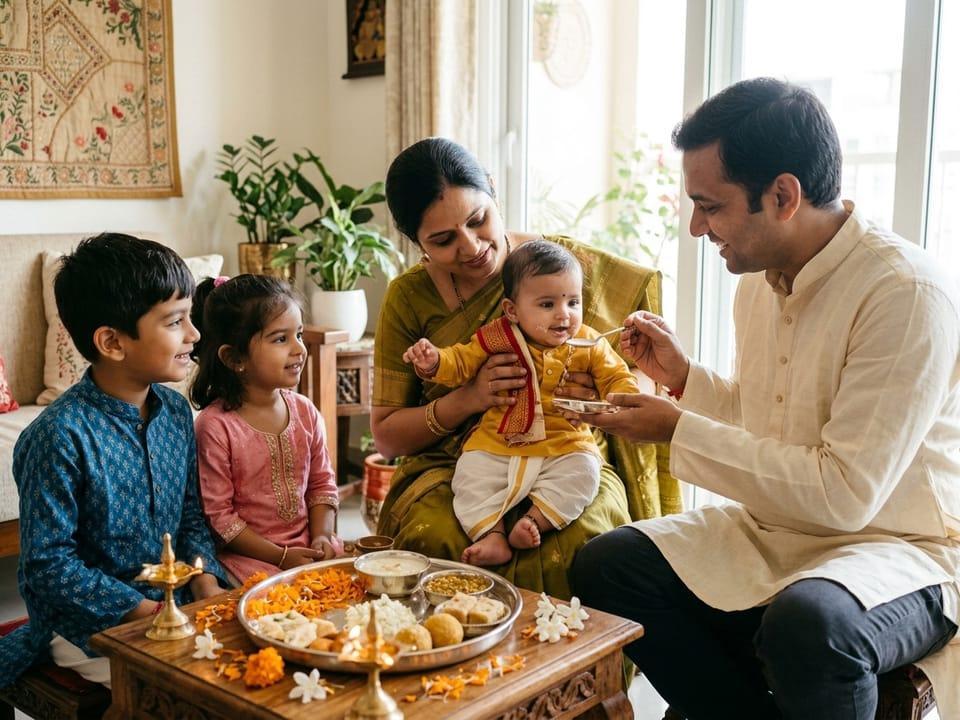
Choose the annaprashan venue by what matters most to your family. A temple puts the ritual at the centre and keeps the day simple, but photography is restricted (Kolkata's Dakshineswar Kali Temple, for one, prohibits it inside the sanctum) and popular temples such as Guruvayur in Kerala are crowded on auspicious days. Home is the easiest place for the baby to eat, nap and be photographed calmly, though space runs out fast; Bengali families, in Kolkata and beyond, often hold the rice ceremony, which they call mukhe bhaat, at the maternal uncle's or grandparents' home. A banquet or community hall fits a long guest list and a sit-down lunch, at the highest cost. You can also split the day: the rite at a temple in the morning, then lunch and the formal family photos at home.
A temple puts the ritual first and the camera second
For some communities the temple is the natural place for the first rice. In Kerala, choroonu is held at a temple in the baby's sixth month, and is often followed by tulabhara, an offering weighed against the baby. Choosing a temple gets you priests who perform the rite routinely, a clear order of events and, usually, a smaller bill than a catered function. The fee for the seva and any offering is set by each temple, so check with the temple office or its official website.
The trade-off is control over the day. Each temple sets its own rules on cameras: the Dakshineswar Kali Temple in Kolkata, for example, tells visitors that photography is prohibited inside the sanctum. You may end up photographing the moment from a doorway, or not at all. Popular temples also fill up on auspicious days. On a Sunday in the month of Chingam in August 2019, ETV Bharat reported 689 choroonu ceremonies at Guruvayur Temple, on the same day as 186 weddings. Expect queues, heat and little room to arrange a family group, check the dress code and photo rules before the day, and pack for feeds and changes while you wait.
Home is kindest to the baby and best for photos
At home the baby naps in a familiar bed, the ceremony can wait until they wake, and nobody minds if the first bite needs a second try. You also choose the light: a room with a big window in the morning, with the puja set up against an uncluttered wall. Bengali families often hold mukhe bhaat at the maternal uncle's or the maternal grandparents' home, which keeps the person who feeds the first rice on familiar ground too. Photographers who cover these ceremonies, such as Golden Memories in Kolkata, list home-based shoots among their services.
Space is the limit. A living room fills quickly once the priest, the puja items, the elders and a photographer are inside, and the big group photo may have to move to a terrace or courtyard. Home also means the family cooks, cleans and hosts, unless you bring in caterers.