
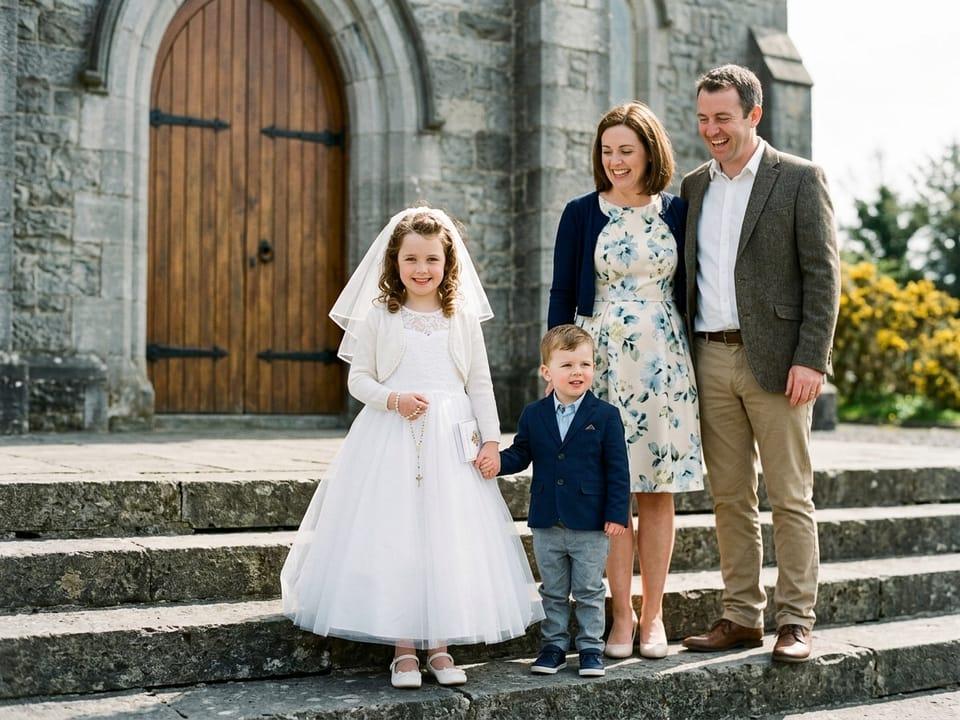
Being autistic or sensory-sensitive does not in itself stop a child from making their First Holy Communion. The Church's Code of Canon Law asks that children understand the mystery of Christ "according to their capacity" and receive with faith and devotion, so the real conversation with your parish is about how to adapt the day. Start that conversation early, with the class teacher and the priest, and keep the photos small: a few minutes at home or in a quiet church, at your child's pace, is plenty.
Talk to the teacher and the parish months ahead
In Ireland, children usually prepare for First Communion and First Reconciliation in class, and a 2014 CatholicIreland.net article points out that teachers who know a child with special needs can help them prepare. That makes the class teacher the first person to talk to, ideally in the autumn or winter before a spring ceremony, followed by the parish priest.
The same article describes the Adaptive First Eucharist Preparation Kit from the American publisher Loyola Press, which the Irish Jesuits publicised; many copies have since been sent to Ireland. It uses picture cards to help children follow the Mass, a matching puzzle that separates the Host from ordinary food, social stories, and PECS picture-exchange strategies. The kit grew out of the American Church's requirement that a child can tell the Eucharist apart from ordinary food and receive it reverently, and the autistic girl whose brother's project inspired it showed that by matching pictures rather than explaining in words.
Questions worth taking to the parish:
- Where your family can sit: the end of a pew, near a door, away from the organ
- Whether your child can go in before the crowd, or join the line first or last
- A visit to the empty church beforehand, ideally standing where they will receive
- A quiet room or porch to step out to, and who goes with them
- When the class will sing, process or clap
Some parishes build rehearsals into the year anyway. In Shannon, Co. Clare, the parish's Grow in Love programme includes an information night, an enrolment ceremony and eight Sundays when children take part in the Sunday Mass. Each one is a low-stakes rehearsal in the same building.
Name the hard parts and plan around each one
The family in the CatholicIreland.net article, from south Dublin, worried about sensory overload, the break in routine, having to sit still and quiet, and the noise and crowds their son disliked. On the day, it went well. Those four make a useful checklist, because each has something you can change.
A short picture story made with your own photos of the church, the priest and the classroom lets your child rehearse the order of the morning. Tell them in advance what will be loud, such as the organ, the singing and any clapping at the end, and agree a signal for needing a break. If ear defenders or headphones help your child elsewhere, ask the parish about wearing them. Keep what follows the Mass small: lunch at home with a few relatives may suit your child far better than a crowded function room. Put the quiet time into the plan rather than hoping it turns up.
If something specific worries you, such as anxiety or the texture of the Host, talk it through with the professionals who already know your child as well as with the parish. For general information, AsIAm, Ireland's autism charity, runs an Autism Information Line on 0818 234 234, Monday to Thursday from 10am to 3pm (as of October 2026).