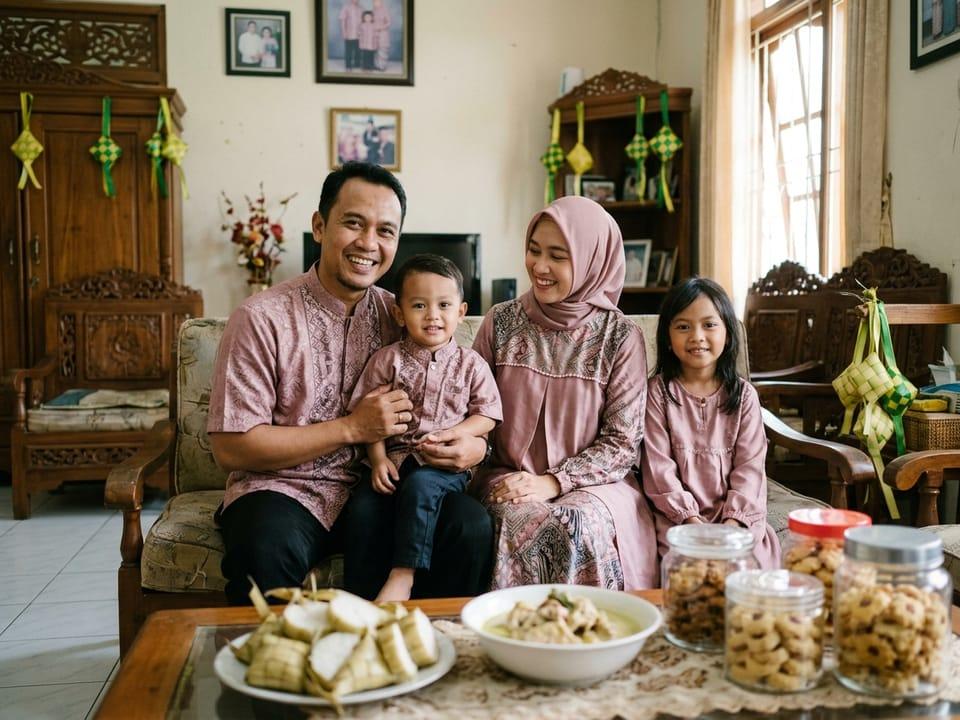
The Lebaran family photo doesn't have to be taken on the morning of Idul Fitri. After a long mudik, a loud takbiran night and an early Eid prayer, many small children have nothing left by the time someone says "foto dulu". A calm five minutes on H+1 or H+2, right after a nap, by a window and with a snack in reach, usually gives a better picture than an hour of coaxing on the first morning. In 2027 the holidays run from about 8 to 15 March for many families, so there is time to wait.
Why Lebaran morning is the hardest slot for small children
Start with the journey. A record 193 million people traveled home for Lebaran in 2024, most of them from about a week to a few days before the holiday, and the Trans-Java toll road and Java's northern coast road carry the worst of the traffic. For a toddler that means long hours buckled in, broken naps and meals at odd times. In March 2026, the Indonesian Pediatric Society (IDAI) reminded families traveling for mudik to make sure immunizations, especially MR or MMR, are complete, because measles spreads easily in crowded terminals and stations. It also advised that drivers rest every two to three hours, that children ride in a car seat or seat belt suited to their age and weight, and that children under six should not travel by motorcycle.
Then comes the night before. Takbiran fills the evening with the beat of the bedug drum and takbir chanted from mosques and musala, and children love it, which means they stay up. The next morning starts early with the Eid prayer, followed by sungkem, visitors and food.
The weather adds to it. Indonesia's coastal lowlands average around 28°C with humidity of 70 to 90%, and March sits at the tail end of the rainy season, which runs from October to March. By mid-morning on Lebaran day, a child in a new outfit, with too little sleep and too many sweets, is running on empty. That is not bad behavior; it's a tired body.
Move the photo to H+1 or H+2
The 2027 holiday decree lists Idul Fitri 1448 H on Wednesday 10 and Thursday 11 March, with cuti bersama on 9, 12 and 15 March. With Nyepi on Monday 8 March, many families have a run of days off from 8 to 15 March. The Minister of Religious Affairs confirms the actual date of Idul Fitri.
That leaves H+1 and the weekend of 13 and 14 March, when the relatives are often still around and the house is quieter. Choose the hour right after your child wakes from a nap, and if you can, late afternoon, when the light is softer. If the first-day outfit has an opor stain, a clean baju koko or gamis works just as well; what matters is that everyone looks like they're dressed for Lebaran.
Five minutes by the window
Set everything up before you call the child: the spot, the phone on a tripod or in someone's hands, and the adults already in place. Make the child the last to arrive, not the first to wait.
A window with light coming from the side, or the shade of a terrace, gives soft light without flash. Let the child wear the lightest layer of the outfit and go barefoot if shoes are a battle. Keep water and a small snack within reach, and give them something to hold, such as a favorite toy. A child on a parent's lap is calmer than one asked to stand alone in front.
Shoot plenty of frames in a short burst and stop when the child says no. Five good minutes is the goal; the sixth minute is where the tears start.
When your child is unwell, the photo waits
A fever, a cough after the journey, or a child who is unusually limp and won't eat changes the plan. Skip the photo, let them rest, and follow your doctor's advice. Don't wake a sleeping child for a picture. The relatives will understand, and a family photo taken after the child has recovered, back home, is still a Lebaran photo.
Studio, home-visit photographer or your phone at home
A studio gives you controlled light, backdrops and a print for the wall, but the slot is fixed and the whole family has to travel to it. With tired children, choose a slot well after the holiday rush and read the reschedule terms before you pay. When studios fill up and how to avoid the queue are covered in booking a photo studio for Lebaran.
A home-visit photographer comes to you, so the child can nap in the next room, but the booked hours run whether or not the nap does, and photographers have their own Lebaran plans too. Your own phone is the most flexible: you can wait for the good mood and shoot in two minutes, though big groups and dim rooms are harder.
The studio or the photographer is worth paying for when you want a formal framed portrait, professional hair and makeup, or three generations together in one carefully lit picture. For a quick family photo with a tired toddler, the phone at home usually wins. If you're still choosing outfits, matching sarimbit outfits covers fabrics that stay comfortable in the heat.
When the only free hour goes to sleep
Sometimes the nap wins, the holiday ends and the photo never happens. pokesta can make a Lebaran family portrait with AI from phone photos you already have, including that cheerful one from last week. It is a generated image, not a record of the day. One photo costs $1 and the first is free, so try it with a recent photo of your child before you plan another shoot: create a Lebaran family photo.
References