
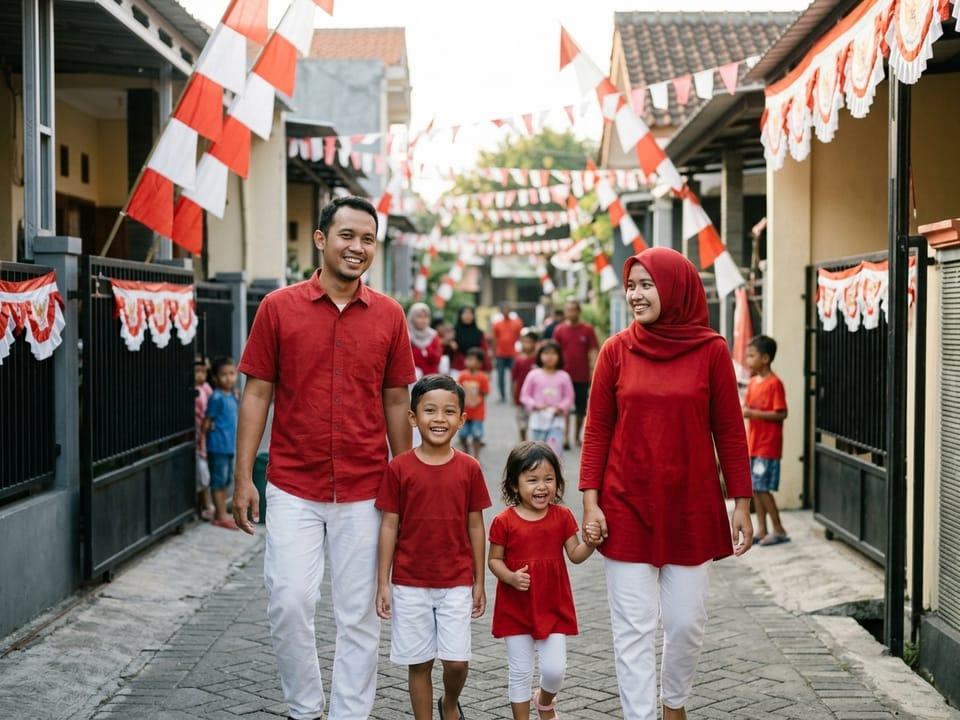
Take the costume photo at the assembly point, before the march begins. Once small children have walked a route in August sun wearing baju adat (regional traditional dress) and make-up, the fresh, smiling picture is gone. August falls in Indonesia's dry season, which runs roughly from April to September, and in Jakarta it is on average the driest and sunniest month of the year. Plan water, shade and a way to find your child as carefully as you plan the costume.
Carnival day is long for a five-year-old
Kindergarten carnivals for Independence Day, HUT RI, are big events. On August 4, 2026, about 600 children from 12 kindergartens in Kota Selatan, Gorontalo, paraded in traditional dress from one of the schools to the city park. Two days later in Bone, South Sulawesi, 1,350 early-childhood pupils from 27 subdistricts set off from the regent's residence, with thousands of parents and residents lining the route. Dates and times are set locally, by the school, the subdistrict or the town committee, so watch for the school's notice.
For a small child the day means an early start, a long wait at the assembly point, a costume that may be heavy or scratchy, make-up, crowds and noise. Plan for the waiting and the heat at least as carefully as for the walking. A few days ahead, ask the teacher three things: what time children must arrive, how long the route is, and where parents collect them at the end. The answers tell you how much water to pack, whether a younger sibling should come at all, and where to stand with the camera.
Heat: water before they're thirsty, shade while you wait
IDAI, Indonesia's pediatric society, notes that children dehydrate more easily than adults: their sense of thirst is weaker, and they can't always tell you they're thirsty. They need more fluid in hot weather. The warning signs it lists include passing less urine, dark urine, sunken eyes and crying without tears. BMKG, the national weather agency, advises drinking plenty of water, cutting back strenuous activity in the middle of the day, wearing light, loose, light-colored clothes, and using a hat, umbrella or sunscreen outdoors.
In practice, that means a full water bottle for each child, offered at the assembly point and again at the finish; an umbrella or a patch of shade for the wait; a thin cotton layer under the costume; and a small towel. If your child becomes unusually drowsy or limp, take them out of the march and get medical help. No photo is worth pushing on.