
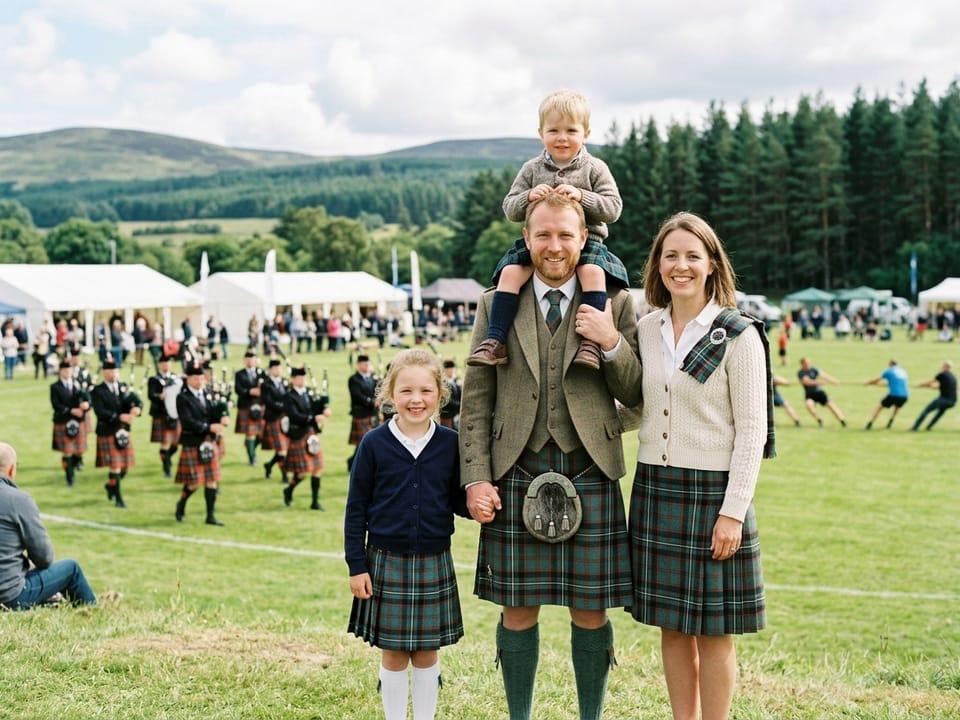
Whether you can photograph your child while they dance depends on the event, and some ban it outright: two competitions registered with the Highland dancing board for autumn 2026 printed "No video or photography permitted during the event" on their entry forms. Read your own entry form before you take out a phone. Plan the costume photos for after your child has danced, not before, and pack for rain, wind and midges, because Highland games happen outdoors.
The rule is on the entry form, not on the field
Competitions registered with the Royal Scottish Official Board of Highland Dancing (RSOBHD), the sport's governing body, run under its rules, but cameras are a matter for each organiser. The West Park competition at Bo'ness on 31 October 2026 and the Dundee competition on 1 November 2026 both say there is to be no video or photography during the event. Several other entry forms for the same season don't mention cameras at all. So the only reliable answer is the one in your entry form or schedule, or from the organiser, and if it says no, the phone stays in the bag while anyone is dancing.
Where photos are allowed, sharing them is a separate question. The RSOBHD's social media guidance applies to parents and carers as well as dancers and teachers. It reminds everyone that posts are public statements even when they're meant privately, asks people to think about how their photos look to others, and says not to speak negatively about other dancers or officials. The Information Commissioner's Office, writing about parents photographing school events, makes a point that fits here too: photos for your own family are personal use, but a public post means thinking about whether the people in it would expect to be shared, with extra care for children. A dancing platform is full of other people's children. Photograph your own, and crop out or skip the rest before you post anything.
Take the costume photos after the dance
Before the dance is the worst moment for photos. Dancers are nervous, the hair and kilt need to stay exactly as they are, and numbers are being called. The West Park entry form asks dancers to arrive "ready to dance – dressed and hair done", with arrival at 9.10 am for a 9.30 start, so the morning is mostly about getting there on time. The same form says the entry fee covers one adult and further spectators pay £5 at the door, so check before the whole family turns up. Its Primary sections are for four, five and six year olds, which is a reminder of how young some dancers are and how long the day can feel for them.
After the last dance the pressure lifts. There may be a medal, the costume no longer has to stay perfect, and nobody is rushing you. Find a plain background away from the crowd, such as a hillside, a stone wall or the side of a tent, and take a few shots of the full costume, a few close-ups, and one of your dancer with the people who came to watch.