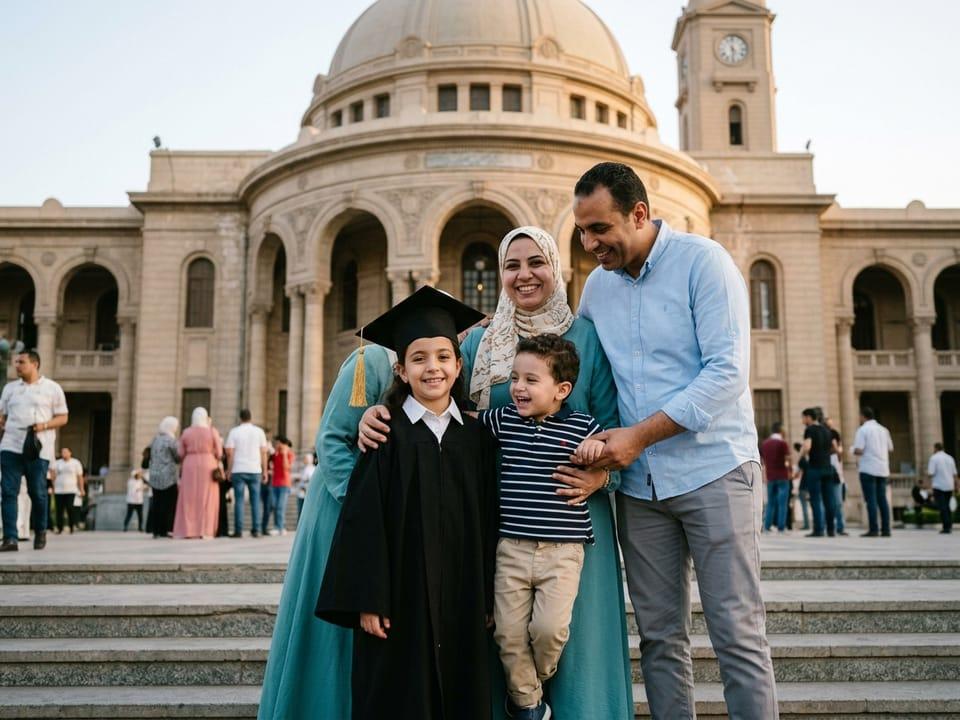
Lots of five- and six-year-olds freeze or cry when they walk onto a stage in front of a hall full of parents, and it says nothing about how their year went. UNICEF's parenting guidance notes that the common fears of preschool-age children usually fade gradually on their own. So plan for a wobble rather than hoping against it: rehearse the walk at home in the gown, ask the teacher where parents may stand, and treat the photo you take after the ceremony, gown on and diploma in hand, as the main picture of the day.
Why the stage is hard for a five-year-old
Think about what the KG2 ceremony asks of a small child. They wait in a line, often away from their parents, in a gown that feels strange. Then they walk out under bright lights into noise and a sea of phones held up at them, look for a familiar face they can't find, and have to cross the stage while a stranger hands them a rolled paper. Any one of those can tip a tired child into tears. Hunger and a missed nap make it worse, and an evening ceremony lands right where many young children run out of energy.
None of that is a parenting failure, and UNICEF says as much about children's anxiety in general. Their advice for upset children is simple: respond with understanding, don't brush the worry aside, and remind the child that the feeling will pass.
Rehearse the walk at home, gown and all
Most of the strangeness can be taken out at home. If the gown comes home before the day, let your child wear it a few times. Lay a line on the living room floor as the edge of the stage, call their name, and have them walk across, shake a hand, take a rolled-up sheet of paper and turn to face you. Make it a game, and do it two or three times rather than drilling it.
Tell your child exactly what will happen and where you will be. UNICEF's advice on separation anxiety stresses talking through the plan for coming back together, so say it out loud: "I'll be sitting near the front, and after you get your paper we'll take photos together and have a snack." A few slow breaths before going on, in for a count and out for a count, gives a nervous child something to do with their body.
Ask the teacher three things in advance: in what order the children are called, whether parents may come to the front or the side of the stage for their own child, and whether the school's photographer covers every child. If parents must stay in their seats, you'll know not to fight for the aisle. On the day, feed your child before you leave and bring water. If they cry on stage, wave and smile; don't call out or scold. Comfort comes first, the photo can wait, and the next try can be in the yard ten minutes later.
In a dark hall, flash off and zoom short
School halls are dim in the seats and bright on stage, which is hard on phone cameras. Turn the flash off: it won't reach the stage, it lights up the heads in front of you, and it distracts the children. Use your phone's built-in 2x or 3x lens if it has one, and stop there, because pinching to zoom further turns faces into mush. Tap on your child's face to focus, then slide the brightness down a little so the stage lights don't wash out their skin. Brace your elbows against your body, or simply record a short video and take a still from it later.
Keep the photos to your own child. Under the July 2022 rules on photography in public spaces, as The National reported them, photographing children is prohibited and adults should give written consent. The rules were written with streets in mind, but they are one more reason not to post other families' children.
Who copes best with tears: the school photographer, a studio, or you
The school's photographer usually has the best angle on the diploma handover, but only a few seconds per child; if your child is crying at that moment, that is the picture. A studio session after graduation week gives you controlled light and time, but it means a new place and a stranger with a camera, which is exactly what a shy child struggles with, so ask about rescheduling if your child falls ill or melts down. Your own phone wins on patience: you can stop, hug, try again and shoot in a familiar place. Whether the school's package is worth buying for that one handover frame is covered in KG graduation photo packages.
Make the photo after the ceremony the one that counts
Once the ceremony ends, the pressure is gone. Find shade in the school yard or wait until you get home, put the cap straight, and have your child hold the diploma with both hands. Crouch to their eye level instead of shooting down from your height. Take one with you and one with the grandparents while the gown is still clean. If the stage went badly, this is the picture you'll frame, and nobody looking at it will know the difference. You can also see how other families' graduation photos turned out on our graduation posts page.
If the gown came off in tears before anyone got a decent shot, or a grandparent couldn't make it, there's another way to get the picture. pokesta can make a KG graduation family portrait with AI from the phone photos you already have of each person. It is a created image rather than a record of the ceremony, so keep it alongside, not instead of, your own photos. It is $1 per photo and the first photo is free: try it with a recent photo of your child to make a graduation family portrait.
References