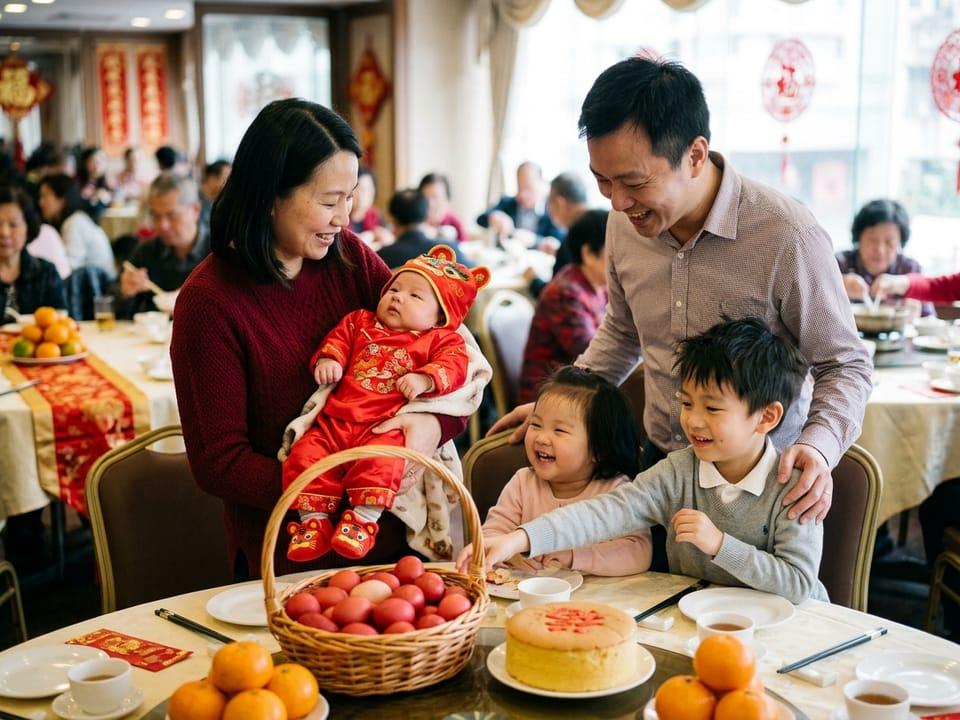
A baby's 100th day is roughly three months and ten days, which puts it between the first and second doses of the DTaP vaccine (百白破, against diphtheria, tetanus and pertussis). Since January 1, 2025, China's national immunization program has given DTaP at 2, 4, 6 and 18 months and at 6 years. Keep the 100-day photo shoot (百天照) off vaccination day and the two days after it; anywhere within a week or two of day 100 is fine. If the baby runs a fever or is clearly unwell, move the photos, and keep the vaccines on schedule rather than delaying them for a picture.
Day 100 sits between two DTaP doses
The technical plan the Chinese Center for Disease Control and Prevention issued for the change sets five doses in total, with the primary series at 2, 4 and 6 months, and says children should get the first dose as soon as possible after turning 2 months. It also gives an example: if the first dose slips to 3 months, the second and third are still recommended at 4 and 6 months, at least 28 days apart. The 2026 edition of the childhood schedule from the National Disease Control and Prevention Administration and the National Health Commission, reported in July 2026, keeps DTaP starting at 2 months with five doses, and states that national program vaccines can be given together.
In practice, two or three injections at one clinic visit is normal, and the next appointment may fall within a few weeks of day 100. Before you book a shoot, take out the vaccination certificate (预防接种证) or the clinic's appointment record and circle every vaccination date within two weeks of day 100. For other vaccines, go by the certificate and the clinic's instructions.
Keep vaccination day and the two days after free
The World Health Organization says vaccine side effects are usually very minor and short-lived, such as soreness where the shot was given or a mild fever, that serious reactions are extremely rare, and that an unexpected reaction calls for a health-care worker. Minor still counts, though. A baby may cry more and sleep less, and three outfit changes and ten minutes of posing in a studio is a lot to ask that week.
Vaccination day already involves queuing and a period of observation at the clinic afterward, and adding a studio visit wears everyone out. So leave the day itself and the two days after empty. DTaP is given as an intramuscular injection, so avoid pressing on the spot for a few days and choose loose clothes that are easy to change. For anything about the baby's reaction and what to do about it, follow the clinic and your pediatrician; none of this is medical advice.
Fever, fussing, poor sleep: when to postpone
A fever is the clearest signal: postpone the photos and see a doctor. Even without one, a baby who is listless, feeding poorly or can't be soothed is reason enough to rebook, since you'd come away with a set of frowning faces and a stressed family. If the baby is only a little fussier than usual and settles after a feed, cut the session to fifteen minutes, use one or two outfits and stop.
The photo doesn't have to land on day 100 exactly. Liu Xinyu, writing on Chinese Social Sciences Net, notes that from the 1980s a photo at the hundred days gradually became something every Beijing family did, a habit that continues today, and that families then had a photographer take it at the full month or after the hundred days. Nobody looking at the picture will know it was taken ten days late. When you book a studio, ask whether the deposit is refundable and how much notice a change needs, and keep the answer in your chat history.
Finding a free day: vaccines first, routine second, studio last
Work through it in this order:
- Count to day 100 and mark two weeks on either side, giving a window of about four weeks.
- Cross out every booked vaccination date in the window, plus the two days after each.
- From what's left, pick times when the baby is usually fed, rested and cheerful.
- Then book the studio or a home-visit photographer, check the rescheduling terms and choose a backup date.
- The evening before, check on the baby; if there's a fever, switch to the backup date.
If vaccinations crowd the window, shoot a few days before the next one. The baby won't be dealing with after-effects, and nobody has to keep checking a temperature while trying to raise a smile.
Studio, home visit or DIY: which copes best with a change of plan
| Option |
How cost works |
When the baby is unsettled |
Rescheduling |
Results |
Best for |
| Studio |
Package price; extra edits and albums cost more |
Changing sets and outfits takes time |
Depends on deposit and rebooking terms |
Lighting and outfits on hand |
Families who want several looks |
| Home visit |
Package price; ask about travel fees |
Familiar room, pause anytime for a feed |
Usually booked ahead |
Photographer brings lights |
Families who'd rather not take a small baby out |
| Shoot at home yourself |
Next to nothing |
Stop whenever you like |
Most flexible |
Depends on light and patience |
Families who want to follow the baby's routine |
A studio's strengths are real: lighting, several outfits and a photographer who is good with babies, all in one visit, so on a good day it's the most efficient choice. To shoot at home, see 100-day baby photos at home for a red-and-gold setup and safe poses, and China's 100-day baby customs for what the hundred-family coat and longevity lock mean.
The baby's health comes first; the photo can wait a week
If the baby has to stay home for a few days after a jab and grandparents far away are waiting to see something, pokesta can make a 100-day family portrait in red tangzhuang from the phone photos your family already has, using AI. It's $1 per photo, with the first photo free. The result is an AI-generated image, not a photo taken that day. Try it with a recent picture of your baby, then go and take the real one once they're feeling themselves again.
References