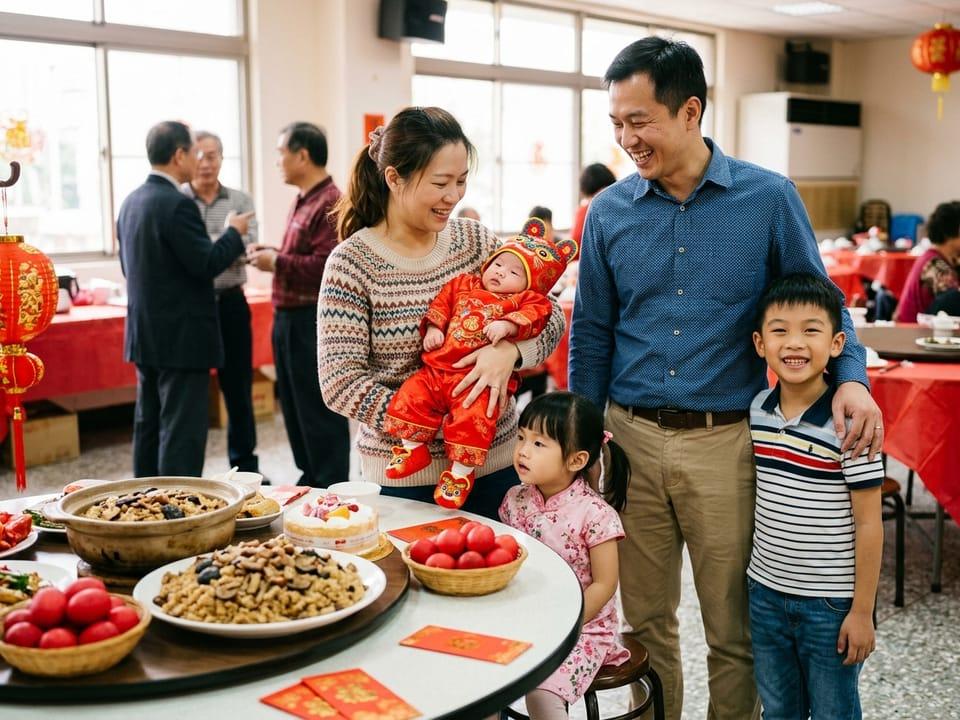
When the Big Sibling Won't Cooperate: Newborn and Full-Month Photos with a Toddler in Taiwan
pokesta Editorial Team · Updated October 23, 2026
The sibling photo works best in a fixed order: photograph the older child alone first, then the two together. When they share the frame, an adult supports the baby and the two-to-four-year-old sits alongside and touches the baby's feet; a toddler should never hold a newborn unaided. Pick the ten minutes after the older child's nap and snack, and if it falls apart, try another day. If you hire a photographer, sibling fees vary: some include household members free, while one platform puts extra people at about NT$300 each.
The big sibling isn't being difficult; they've lost the starring role
In Taiwan the older child is often called dabao (大寶, "big treasure") and the new baby erbao (二寶). HealthyChildren.org, the American Academy of Pediatrics' site for parents, says to expect some regression when a new baby arrives: a toilet-trained child having accidents, or asking for a bottle. It describes this as the older child's way of making sure they still have your love and attention, and advises against telling them to "act their age."
Picture the shoot from the older child's side. A room full of relatives crowds around the newborn calling "look over here," and the toddler hears that they've been pushed aside again. Crying, running off or trying to scoop the baby up is less defiance than an attempt to win back their place. Children react differently, so there's no need to label it jealousy, but you can plan the session around it.
Give the older child the first five minutes
Reverse the usual order. First the older child alone, then with mum or dad, then with the baby, and the whole family last. For the solo shots, let them hold a favourite soft toy or wear clothes they chose. For those minutes, the adults and the camera belong to them.
Then hand them a job. HealthyChildren.org suggests inviting the older child to help, and asking visitors to spend time with them too. On the full-month day (manyue, the celebration when a baby turns one month old), the older child can carry the little basket of red-dyed eggs, or pass the baby's socks to mum. Before you shoot, ask "Do you want to sit by her head or her feet?" and let them choose. Use their name, not just "big brother."
Timing matters more than the setting: just after a nap and a snack, before they're tired out, for ten minutes at most. A newborn can wait; a two-year-old can't. Once the wriggling and the "no" start, have another adult take them off to play and try another day.
An adult holds the baby; the big sibling sits and touches the feet
A one-month-old can't hold up their own head. In the US Centers for Disease Control and Prevention's milestone checklist, most babies can hold their head steady without support when held by about four months. So whenever the two share a frame, an adult supports the baby's head and body, and the older child's only job is to be close.
Three set-ups hold up well. A parent sits on the bed or a floor mat holding the baby while the older child leans on the parent's shoulder and looks down. Or the baby lies on their back in the middle of a big bed, an adult sits beside them, and the older child sits in front of the adult and reaches over to touch the baby's feet. Or shoot just hands from above, the baby gripping one of the older child's fingers.
If the older child insists on holding the baby, sit them on a floor mat with their back against a wall or an adult and their legs straight out. An adult lays the baby across their lap and keeps one hand under the baby's head and neck the whole time; take a few frames, then lift the baby back. HealthyChildren.org also suggests letting older children hold the baby if they ask first, and teaching them how. No standing, no lifting the baby off a bed, no holding on the edge of a sofa.
Ask a photographer about sibling fees and timing first
PRO360, a Taiwanese platform that matches clients with photographers, lists newborn sessions at roughly NT$4,000–7,000 based on quotes from 2024 to 2026. It says parents can usually join at no extra cost, while other family members may be charged at family-portrait rates or about NT$300 each. 揪影子快門 (Enjoying Shutter), a newborn photographer in Taipei, states that household members can join group photos free. Both were checked in October 2026; prices and terms vary by photographer, season and package, so confirm on their official pages.
Time matters more than money. PRO360's FAQ says newborn sessions usually take three to five hours, only about two of them actual shooting. No two-year-old will wait quietly that long, so when you book, ask whether the older child can join for just the last half hour, whether their solo shots count toward the retouched total, and whether the sibling photo can be reshot on another day if it doesn't happen. Our guide to newborn photographers who come to your home covers the other questions to ask.
If it doesn't happen, keep the two of them another way
Missing the shot once is normal. By the four-month shouxian ceremony the baby's head is steady and the older child is used to the newcomer, a perfectly good time to try again. Until then, everyday snaps often tell the truth better: the older child peering through the cot bars, or a video of them saying the baby's name for the first time. For shooting at home during the confinement month, see full-month photos at home.
If the full-month day arrives and the two still haven't shared a decent frame, pokesta can use the phone photos your family already has to make a sibling or family portrait in full-month outfits with AI, at $1 per photo with the first photo free. It's a created image, not a record of the day, but it gives the grandparents something now. Pick a recent photo of your older child and try a free full-month portrait before you book anyone.