
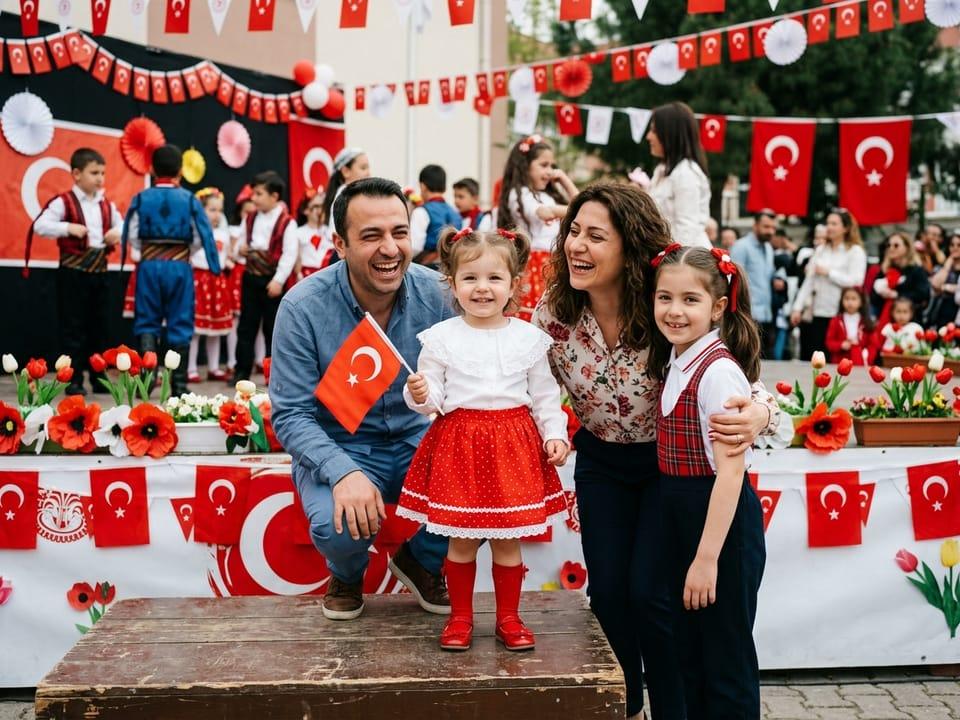
For a one-off 23 Nisan show, the cheapest costume is usually the one you don't buy: borrow from an older child, join the class's group rental, or rent for a day or two. Buying only pays off if a younger sibling will wear it later or the outfit comes out again for other events. And because the education ministry's rules say schools can't require parents to buy special outfits that put a financial burden on the family for celebrations, it's perfectly fair to ask the teacher whether something simpler would do.
Schools can't require a costume that strains your budget
In December 2024 the ministry amended the dress regulation for schools under it: for special days, weeks and celebrations, parents can't be made to buy special clothing that creates a financial burden, whether it's for use in lessons or outside them. In January 2025 the ministry said private schools should follow the same principle as state schools, with international and minority schools excepted.
That doesn't mean costumes are banned. A teacher can still suggest one, and your child may well love wearing it. But if the request feels heavy, ask two questions: can the class share or swap costumes, and would a white shirt with a red skirt or trousers be fine instead? National Sovereignty and Children's Day marks the opening of the Grand National Assembly on 23 April 1920, and red and white is as much a part of the day as any folk costume.
It also helps to know what a zeybek outfit actually consists of. The dance comes from the Aegean region and has well over a hundred local variants. The men's costume typically combines a small fez or kavuk on the head, a loose white shirt, an embroidered vest (yelek), a long, wide decorated sash (kuşak), short baggy şalvar trousers, long socks and boots. Women's versions use a velvet cepken jacket, an embroidered blouse and an üçetek entari robe over şalvar. Once you see it as parts, you can mix: a white shirt and socks from home, with only the vest, sash and cap rented or borrowed.
Four ways to get the costume
A group rental arranged by the school or class is the least effort. Everyone matches, you pay once, and the teacher deals with pick-up and return. The catch is sizing: costumes ordered by age can arrive too long or too tight, so send your child's height and chest measurement early and ask who pays if one gets stained.
Renting from a costume shop yourself lets your child try it on. Ask for the full cost, not just the rental fee: deposit, any cleaning charge, and what happens if it's damaged. Check the return day carefully, since 23 April is a public holiday. When you collect it, photograph the costume and point out any existing marks.
Buying online gives you a costume to keep, which only matters if it'll be worn again. Read the size chart in centimetres, order early enough to exchange before April, and check the return policy before you pay.
Borrowing or a hand-me-down costs nothing. Ask in the class parents' group or among older cousins. Wash it as the label says and give it back the way it came, perhaps with a small treat for the lender's child.