
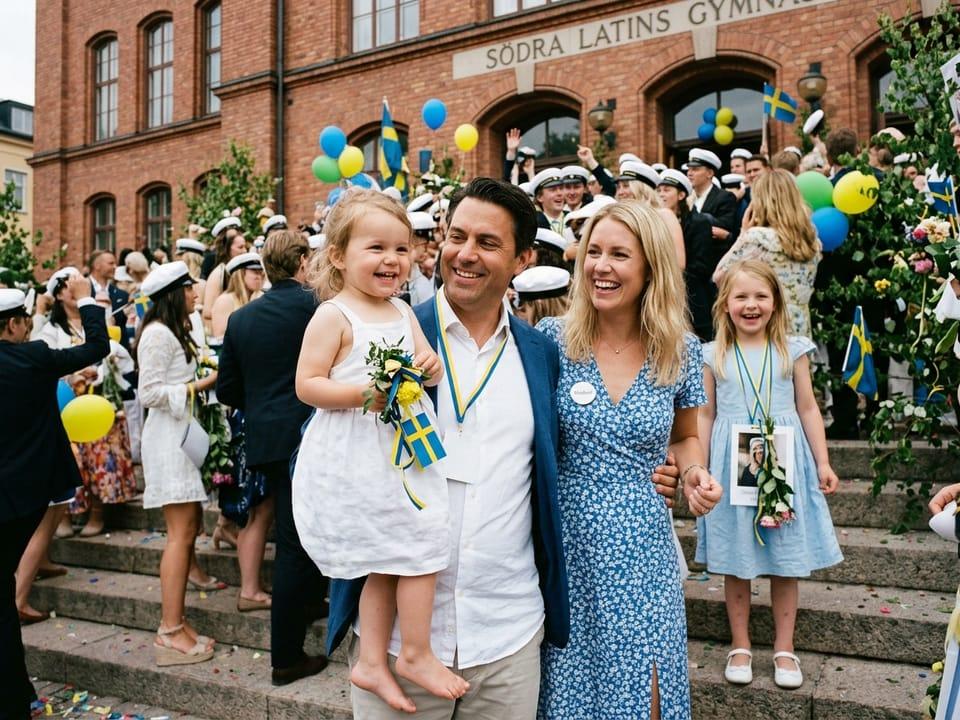
If the forecast for studenten says rain, keep the white cap covered until the moment of the run-out, put the sign in a clear plastic sleeve, and plan the family portrait for a porch or a window at home rather than the schoolyard. If it says heat, the real risk is to grandparents and small siblings standing in the sun, not to the pictures. One cap maker, ABC-Gruppen, advises against washing a student cap at all, so preventing marks is far easier than removing them. SMHI, the Swedish weather service, issues a heat advisory when daily highs of 26 to 30 °C are expected three days in a row.
Keep the cap covered until the run-out
A wet cap is mostly a problem of marks. ABC-Gruppen's advice is not to wash the cap because it can be ruined; for a stain, try a damp cloth or a foam carpet cleaner on a small hidden spot first, and expect the texture of the fabric to change. The same company sells a cap cover (mösskydd) for exactly this reason. If your graduate has one, use it for the morning and the wait. If not, carry the cap in a clean bag and put it on just before leaving the building.
On the day itself, a transparent umbrella is the better choice for photos. A red or blue umbrella casts its color onto faces, and a white cap under a colored canopy turns the same shade. Bring a dry cotton cloth to pat off drops rather than rub them in.
The sign and the phones need the same attention. A large clear plastic sleeve or a freezer bag taped around the photo keeps a printed sign from warping, and some shops include rain protection when you order; the options are in our guide to studentskylt costs. Keep the phone in a zip bag until the doors open, wipe the lens just before the graduates appear, and let someone else hold the umbrella over you while you film. When the class comes out, lower your umbrella if you can. A schoolyard full of open umbrellas hides the doorway from everyone behind you.
In the heat, plan for the grandparents and the youngest first
Heat on studenten day is easy to underestimate because the wait is long and most of it is spent standing. 1177, the Swedish health service, lists people over 65, small children and pregnant women among those most sensitive to very hot weather. Its advice is to drink more than usual even before you feel thirsty, to stay in the shade as much as possible, and to avoid exertion during the hottest hours. It also notes that children can find it harder to feel thirst, and that babies under one should preferably not be in direct sunlight at all.
In practice that means a folding stool or two for the grandparents, a bottle of water each, a sun hat, and one adult whose only job is to stay with them in the shade and bring them forward when the graduates are about to appear. A baby is better off with a second adult somewhere shaded, away from the crowd at the doors.
SMHI's heat advisory starts at daily highs of 26 to 30 °C for three consecutive days, and a yellow warning follows when 30 °C or more is expected for three to four days. If either is in force, shorten the wait by arriving later and accept a less perfect spot.