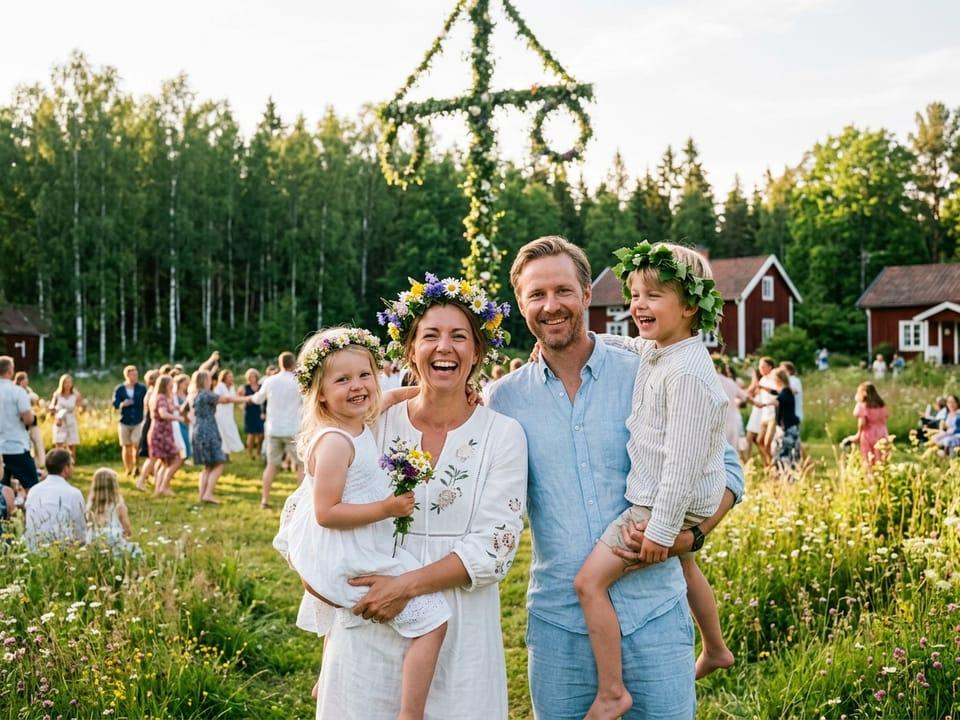
Showers are part of Midsummer Eve in Sweden. SMHI, the national weather service, calls them a common feature of midsommarafton, and temperatures on the day have ranged from near freezing to 35°C. Grass pollen is usually at its most intense in late June, according to 1177, so an allergic child can get both problems at once. The plan that works is to decide the place and the line-up for the family crown photo before the day, and take it the moment the sun comes out. In 2027, Midsummer Eve falls on Friday 25 June.
Expect a shower, not a lost day
Swedish law sets Midsummer Day as the Saturday between 20 and 26 June, which puts Midsummer Eve, the day most families celebrate, on the Friday between 19 and 25 June.
SMHI's page on midsummer weather is frank about what to expect. Cold air from the Arctic Ocean and Greenland can still reach Sweden in June, so temperatures shift a lot from year to year. The warmest midsummer on record reached 35°C in Sveg in 1935; in 1987, Stockholm only got to 11°C and parts of inland Norrland were near zero. Showers are common, and SMHI adds that if you want to avoid them, the chance of dry weather is generally a little better at the coast. Its notes on recent years show how much the timing varies. In 2016 rain and thunder in the south cleared after the morning, leaving only a few showers. In 2023 Luleå had its wettest Midsummer Eve since records began in 1933, with 44.0 mm. In 2024 heavy rain moved in from the south during midsummer night, after a fairly sunny day.
For photos, that means a wet forecast rarely means a wet day from start to finish. Keep an eye on SMHI's radar during the afternoon and be ready when a dry spell opens.
Decide the spot and the line-up before the weather does
Most midsummer photos fail on logistics rather than light. Everyone has to stop what they're doing, the crowns have to be on and the baby has to be awake. Settle these in the morning:
- The spot: the porch steps, the front of the house, or the edge of the meadow near the maypole, ideally with a roof within ten steps.
- The order: who stands where, who holds the youngest, who presses the button.
- The phone: on a small tripod, framed, self-timer set, kept under cover.
- A towel for wet benches and a soft cloth for raindrops on the lens.
When the sun comes out, call everyone, take a burst and you're done in two minutes. Light just after a shower is soft and clear, and wet leaves shine behind you. The dancing around the midsommarstång is easier as video, which doesn't need anyone to stand still.
If the rain sets in, use the covered spot. An open barn door, a covered veranda or a large umbrella held just out of frame all work. A family under the eaves with crowns on and rain falling beyond them is still a midsummer photo.
Put the warm layers under the white clothes
White and pale outfits suit flower crowns best, as our guide to crowns and outfits explains, but they're thin. Put a wool or thermal layer under dresses and shirts, add tights, and pick a cardigan or knit in a pale colour so it can stay on in the photo. Rubber boots look fine on wet grass, so there's no need to fight about them. For the minute of the photo, jackets come off together and go straight back on.
Grass pollen peaks around midsummer
According to 1177, the national health information service, the grass pollen season can start at the end of May in southern Sweden but is usually most intense at the end of June, and people allergic to grass can have symptoms into July and August. Symptoms include a runny or blocked nose, sneezing, itchy, watery eyes and tiredness. Naturhistoriska riksmuseet publishes pollen forecasts for the coming days, based on measurements at 23 stations around the country, so check them in the week before.
1177 advises contacting a vårdcentral if a young child has pollen symptoms, so do that in good time rather than on the Friday. It also suggests starting medication one to two weeks before the season; ask the vårdcentral or a pharmacy what suits your child's age. On the day, keep an allergic child's time in the meadow short, leave grass stalks out of their crown and build it from leaves and garden flowers, and take their portrait near the house. Red, itchy eyes show in pictures, so do that portrait early, before a long afternoon outside. For mosquitoes, light long sleeves in the evening and a repellent labelled for your child's age do more than anything clever.
Photographer, studio or yourselves on midsummer
Hiring a photographer for Midsummer Eve itself makes sense for a big gathering: three generations in one frame, the raising of the pole, the long table. It's a holiday, so ask early about availability, what the fee covers and what happens if it pours. A rain plan in writing matters more than the hourly price.
A studio portrait in crowns is a different idea: indoors, no pollen, no wind, any day in June. It suits a family with a severely allergic child, but it won't look like your midsommar.
Doing it yourselves costs nothing and, more importantly, lets you wait for the dry spell. On a day that changes with every cloud, that flexibility beats any booked time slot.
When the dry spell never comes
Some years the rain doesn't stop, or the allergic child spends the afternoon indoors. pokesta can create a Midsommar family portrait with AI from phone photos you already have, crowns and meadow included, at $1 per photo with the first photo free. It's a made image, not a record of your day, so keep the rainy porch pictures too. Start with one photo of your child and decide from there whether you need anything else.
References