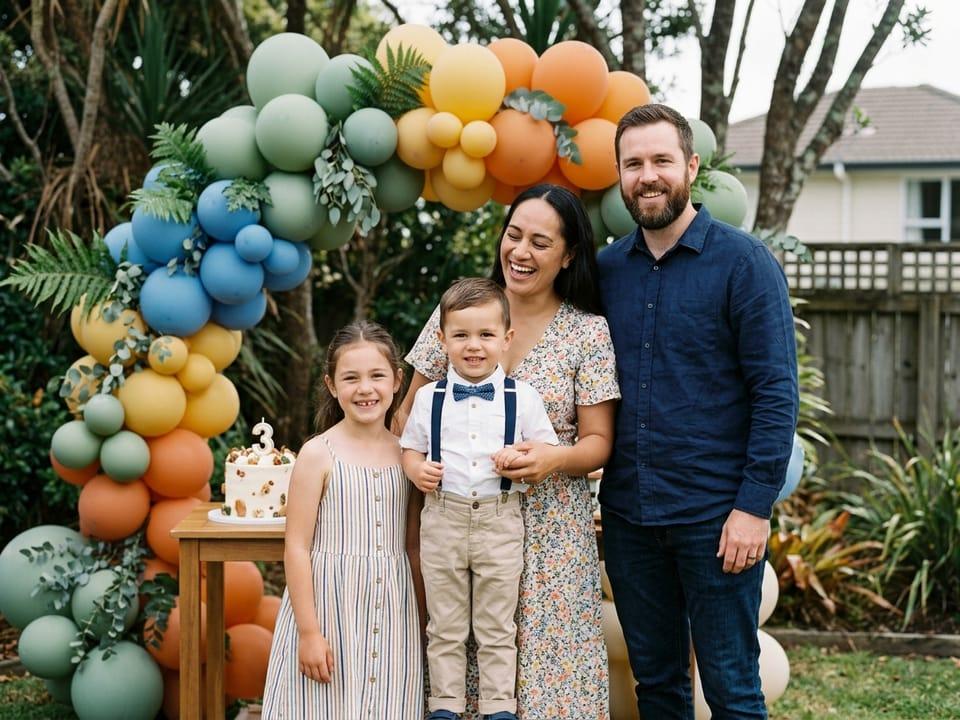
In New Zealand, if you commission a photographer and pay or agree to pay for the photos, the default under the Copyright Act 1994 is that you own the copyright, not the photographer. That default, the commissioning rule in section 21(3), gives way to an agreement to the contrary, so in practice the contract you sign decides. Read the rights clause before you pay, and settle printing, sharing and the photographer's own use of your photos at the start. This is general information, not legal advice.
The default: whoever commissions and pays owns the copyright
IPONZ, the government's intellectual property office, sums it up: the person who created a work is usually the copyright owner, unless it was made in the course of employment or someone commissioned it and agreed to pay for it. For a birthday session you booked and paid for, that someone is you.
Two details matter. First, the commission has to exist before the photos are taken. Law firm Lane Neave's guide explains that the client must have engaged the photographer and paid, or agreed to pay, at that point. Second, photos that weren't commissioned belong to the photographer. If someone photographs your family at a public event and later offers you the pictures, you can only get the copyright through a written assignment signed by the photographer.
A contract can change the default, so read the agreement
The commissioning rule applies "unless there is an agreement to the contrary," as Lane Neave puts it. A photographer who wants to keep copyright has to agree that with you, and the booking contract is where it will be. Look for a clause headed copyright, ownership or usage. If it says the photographer keeps the copyright, what you're buying alongside the photos is a licence: permission to use them in set ways.
A licence can be limited by time, territory, type of use or number of copies. Unlike an assignment, it doesn't have to be in writing, but an unwritten licence is, in Lane Neave's words, a recipe for dispute. Get yours in writing.
Print releases and personal-use licences in plain words
A print release is written permission to print the files wherever you like, from a pharmacy kiosk to an online lab. A personal-use licence typically lets you print for your home, share with family and post on your own social media, but not sell the photos or use them in advertising. If a package mentions only web-size files, ask what high-resolution files or a release would cost. Charging separately for them is a legitimate way to price, but you want to know before you book, not after the gallery arrives.
Rights run the other way too. Ask whether the photographer may use your child's photos on their website, social media or advertising, and say no if you'd rather they didn't. Photos of identifiable people can be personal information under the Privacy Act, which is one more reason to agree on this in writing.
Questions to settle in writing before you pay:
- Who owns the copyright, and if it's the photographer, what does my licence allow?
- Are high-resolution files included, and is there a print release?
- Can I post the photos online, and should I credit you?
- Will you use our photos in your portfolio or advertising?
- How long will the online gallery stay up?
Studio, on-location or your own phone: who ends up with what
|
Studio package |
On-location photographer |
Photos you take yourself |
| Default copyright |
The commissioning client, unless the contract says otherwise |
The same |
You |
| Check in the contract |
File sizes, print release, extra prints |
File sizes, gallery period, portfolio use |
Nothing to sign |
| Extra cost for files or prints |
Depends on the package |
Depends on the package |
Printing only |
| Suits |
Formal portraits, styled sets |
Natural family photos outdoors |
Everyday moments |
A paid photographer is still the best choice for a formal portrait, a large family group or a styled first-birthday set. The aim is only that the paperwork matches how you plan to use the photos. Our notes on newborn mini sessions and cake smash packages cover other questions to raise.
The Act is being amended, so check the current text
As of October 2026, the creative-sector organisation WeCreate says MBIE is preparing draft legislation to amend the Copyright Act. Check the current wording on New Zealand Legislation before relying on any summary, including this one. For free legal help, Community Law Centres around the country offer plain-language information, and one-on-one advice for people who don't have much money.
A picture for the fridge without a rights clause to decode
If what you mainly want is an image for a birthday card or the fridge, pokesta can create a birthday family portrait with AI from phone photos your family already has. It's an image the AI makes, not a photograph of the day, so it sits alongside a real session rather than replacing it. It's $1 per photo and the first one is free, so try it with a recent photo of your child before deciding how many digital files to buy.
References