Kinder Graduation in the Heat: When Your Child Cries or Freezes on Stage, and the Photos to Take Before You Leave Home

pokesta Editorial Team · Updated October 25, 2026

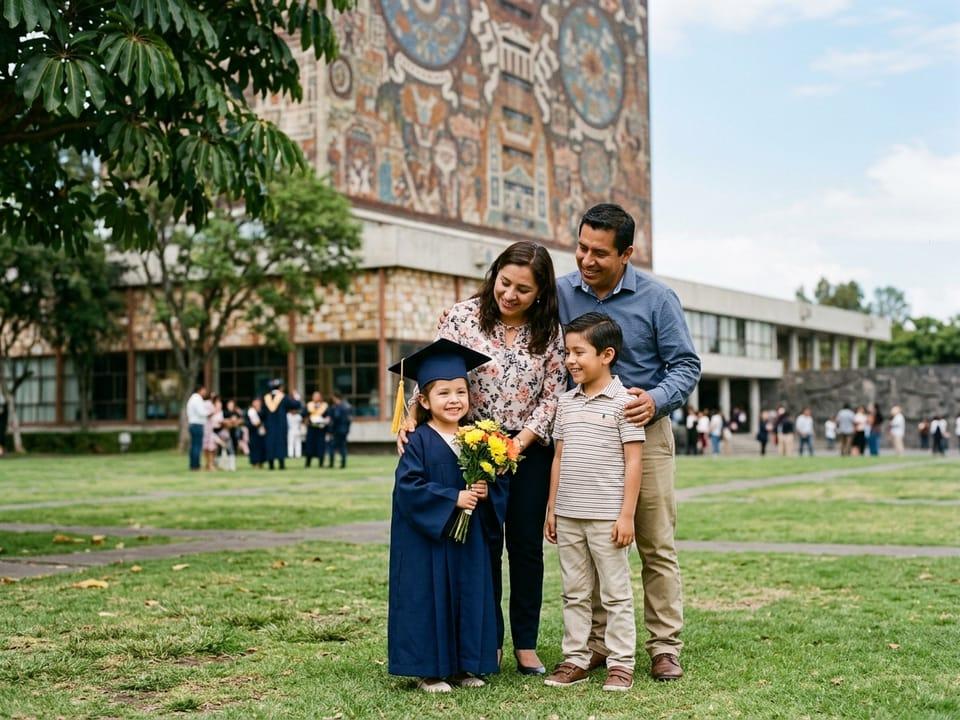
Graduation family photo (AI-generated image)

The most reliable kinder graduation photos are the ones taken before the ceremony and after it, not during. Take the cap-and-gown portrait at home in the morning, when your child is fresh and the light is soft, and plan the family photo for the shade straight after the ceremony. During the ceremony, give one adult the camera and another the video, and accept that a child who cries or freezes on stage is a normal five-year-old, not a ruined day. Under SEP's 2026–2027 calendar, preescolar classes end on Friday, 9 July 2027, so most ceremonies take place in the weeks just before it, when much of the north is near its hottest and the centre is in its rainy season.

Heat, a polyester gown and a long wait are what tip children over

A kinder graduation often happens in a patio or under an awning, with small children lined up in a gown and cap while speeches go on. In Monterrey, the national weather service's 1991–2020 normals put the average daily maximum at 35.7°C in June and 35.8°C in July. Mexico City is milder, about 25.8°C in June at the Tacubaya station, but it rains on roughly 16 days that month and 22 in July. Either way, the child is waiting, warm and surrounded by noise, which is when tears come.

IMSS doctors, quoted by El Universal, advise not waiting for children to ask for water, because by the time they ask, mild dehydration has begun. They recommend light, loose clothing, a cap or hat, plain water and avoiding physical activity outdoors in the heat. If a child shows a rising temperature, dry mouth, dizziness, nausea, fast breathing, confusion, unusual drowsiness or fainting, they say to seek emergency care straight away.

In practice: bring a water bottle with your child's name on it and hand it to the teacher if parents sit apart. Dress your child in a thin cotton layer under the gown, and put the gown on at the last moment, at school if the teacher allows. Keep a hat for the wait outside. Pack a small towel and a spare shirt, because a sweaty child in a damp collar will not smile for anyone.

Take the cap-and-gown photo at home, before anyone is tired

The photo you will frame does not need the stage. On the morning of the ceremony, or on a cooler day the week before, put the gown on at home and take ten minutes. Stand your child half a metre from a window or in an open doorway, out of direct sun, with a plain wall behind. Crouch to their eye level. Ask them to throw the cap, show you their best "graduate" face, or hold the hand of a little brother. Then take the gown off again until it is time to leave.

If grandparents are coming, take the three-generation photo at the house too, where there is shade, a chair for the oldest and nobody waiting behind you.

During the ceremony, one person shoots and one films

Seats are usually fixed, and parents can rarely get up. Decide beforehand who does what. One adult takes photos, using burst mode when your child's name is called. The other records video from start to end of your child's turn, without zooming in so far that you lose them when they move. A third adult, if you have one, just watches and waves, which helps more than another phone.

If your child cries or stands frozen on stage, do not call out instructions or push forward with the camera. Wave, smile and let the teacher handle it. Freezing in front of a crowd is common at this age, and spotting a familiar face often helps. Afterwards, tell them they were brave to go up at all. A photo of a tearful graduate held by a teacher is still part of the day, and the family photo in the shade ten minutes later usually goes better than anyone feared.

A studio session is the backup, not the main event

Families who worry about tears and heat often wonder whether to book a professional. It helps to compare honestly. The school's photographer, if there is one, is the only person who can take the class photo and the close shot on stage, but they work on the school's schedule, and a crying child can't be retaken. A studio or a photographer's session on another day is the opposite: air-conditioned or indoors, booked after a nap, and it can be moved by agreement if your child is ill; ask about that before paying a deposit. Cronoshare's guide, dated July 2026 and checked in October 2026, gives 2,400 to 4,000 pesos for an hour in a studio in Mexico; prices vary, so ask for a quote. Your own phones cost nothing and can wait for the right moment, but the quality depends on light and luck.

For most kinder families, the order is phones at home first, the school's group photo if it is offered, and a studio session only if you want a large printed portrait with parents. What comes with the school package, and what doesn't, is covered in what's inside a kinder graduation package.

The family photo can wait for a calmer day

If the day ends with a tired child and only a handful of usable pictures, nothing is lost. The gown can go back on for a quiet photo at home on Sunday. For relatives who couldn't come, pokesta can make a graduation family portrait with AI from phone photos everyone already has, with your child in cap and gown. It's an illustration made by AI, not a record of the ceremony. The first photo is free and then it's $1 per photo, so try one with a recent photo of your child on an evening when the heat has passed.

References