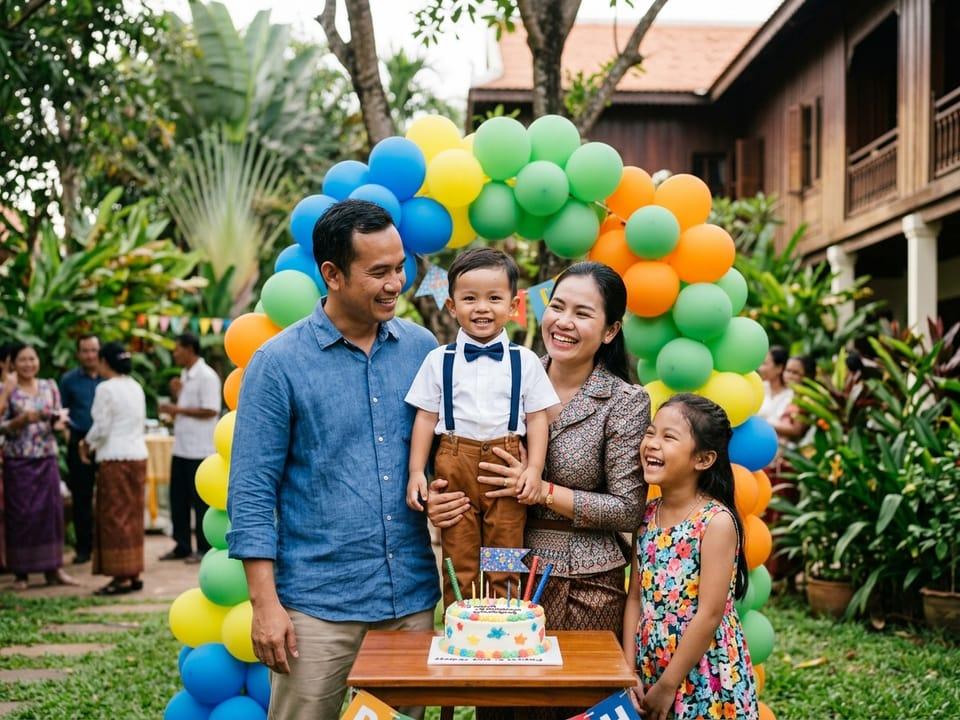
A baby who cries at a first birthday shoot is doing what babies that age do: wariness of strangers typically starts around four months and peaks between six and twelve months, right when the shoot falls. Book the slot after a nap, cool the car before you leave, ask for the first ten minutes without a camera, and keep a parent's face and voice just behind the lens. Before you pay a deposit, ask how the studio handles overtime, reshoots and moving the date.
Why a one-year-old cries in a studio
Three things pile up on the day. The first is the stranger. Wariness of unfamiliar people usually shows from around four months, is strongest from six to twelve months and can come back until about two. The US Centers for Disease Control and Prevention lists "is shy, clingy, or fearful around strangers" as a normal milestone at nine months. A photographer leaning in with a big camera is exactly the kind of stranger a baby this age backs away from, and the fear tends to be stronger when the stranger is close.
The second is the room. Bright lights, a white floor, unfamiliar echoes and a pile of props all arrive at once. The third is the body: a skipped nap, a hungry tummy, or a hot drive followed by an air-conditioned room. In Phnom Penh, average daily highs sit between 31°C and 36°C all year, so the jump from the street to the studio is rarely small.
Book after the nap, and cool the car before anyone gets in
Ask for a slot that starts about an hour after your baby usually wakes from a nap, once they've eaten. If the studio offers both morning and afternoon slots, pick the one that fits the nap, not the one that fits your work schedule.
Then think about the drive. The American Academy of Pediatrics notes that a car can heat up by about 11°C (20°F) in just ten minutes, and that a child's body heats up three to five times faster than an adult's. Run the air conditioning for a few minutes before you strap the baby in, and keep the birthday outfit in a bag rather than dressing them at home. Change at the studio, after they've cooled down. And never leave a baby in the car, not even for a moment while you carry the bags in.
Ten minutes without a camera, and a parent behind the lens
Ask the photographer, when you book, to give your baby the first ten minutes without the camera. Let the baby sit on your lap on the set, touch a prop, look around. Advice on stranger anxiety suggests that strangers approach slowly and give the child time to warm up, and that it helps when the baby sees a parent interacting happily with the new person. So chat with the photographer in a relaxed voice while your baby watches.
When shooting starts, stand right behind the photographer's shoulder. The baby looks for your face, and the camera catches that look. Bring the songs and the one toy that works at home, a snack that isn't sticky, and a spare outfit. Skip the outfit changes if the first one is going well.
A few tears don't spoil the shoot. A pout, a clinging hand or a face pressed into a parent's shoulder is how a one-year-old really looks, and those frames are worth keeping alongside the smiles. If the crying won't stop after a feed and a walk outside the room, stop and use the studio's reshoot or date-change policy rather than pushing on.
Ask about overtime, reshoots and date changes before you book
Studios write their own terms, and not all of them publish them. Ask three things before you pay: how much extra time costs if your baby needs breaks, whether a reshoot is offered if the baby cries throughout, and how late you can move the date if your baby is ill.
For comparison, Flytographer, an international service that books photographers including in Phnom Penh, publishes its terms (as of October 2026). Extra time costs US$165 per 30 minutes and only if the photographer is free; time lost to arriving late is forfeited; it will try to accommodate date changes requested more than seven full days ahead but can't guarantee them; and within seven days cancelled shoots aren't refunded. Other studios and photographers will differ, so get their answers in writing.
A home visit suits a wary baby, a studio suits a formal portrait
|
Studio |
Photographer at home |
Your own phone |
| Cost |
Package price |
Photographer's time and travel |
Nothing extra |
| Crying and moods |
New room, new person |
Familiar room, new person |
Familiar room and people |
| Moving the date |
Per the studio's terms |
Per the photographer's terms |
Any time |
| Result |
Even light, backdrops and props |
Natural, real home |
Depends on your light and patience |
| Suits |
Formal portraits with grandparents |
Babies who struggle with new places |
Everyday birthday pictures |
A studio is still the better choice for a formal portrait with grandparents and the extended family, or a set you can't build at home. If your baby struggles badly in new places, a photographer coming to your home takes away one of the three problems. For a simple corner at home, see our guide to a DIY birthday photo backdrop.
A portrait you can make while the baby naps
If the studio day goes badly, you can still have the picture you hoped for. pokesta creates a first birthday family portrait with AI from the photos already on your phones, including the smiley ones taken at home last week. It's a created image, not a photo from the shoot. It's $1 per photo and the first photo is free, so make one with a recent smiling photo before deciding whether to rebook. You can also browse other families' birthday pictures.
References