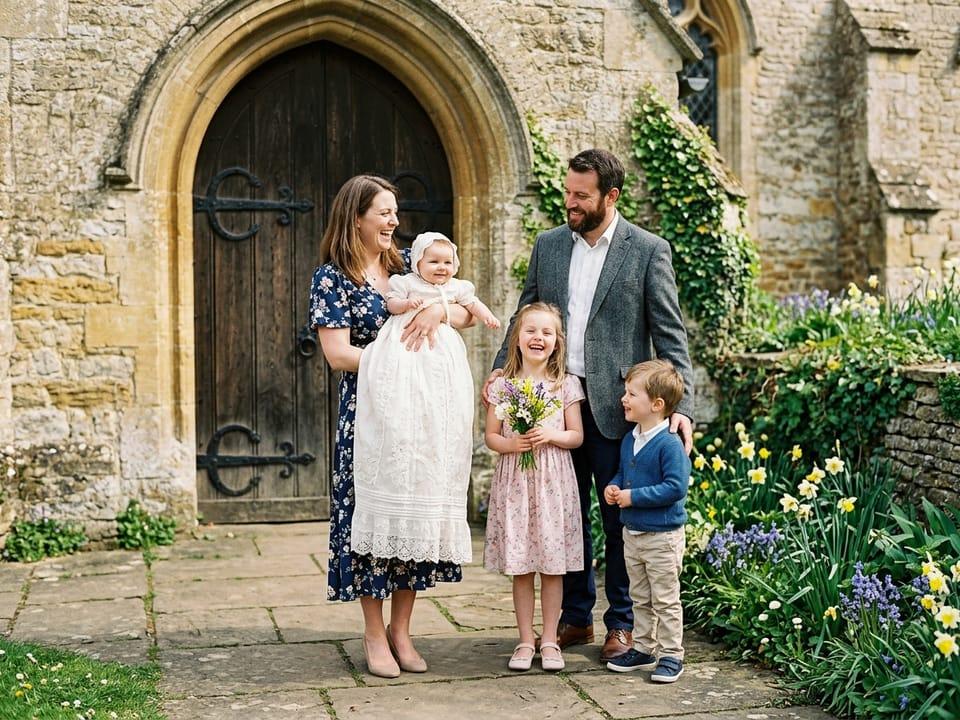
The cheapest christening gown is the one already folded away in a relative's wardrobe, and the next cheapest is no gown at all. The Church of England says plainly that a traditional gown isn't compulsory, and Catholic parishes care about something white rather than something long and lacy. So the budget question is less about what to buy and more about how to wear an heirloom without damaging it, where to borrow, and what to put on a baby who has outgrown the family gown.
The church asks for less than the shops suggest
In its guide for parents, the Church of England notes that many families like a traditional christening gown but that it isn't compulsory, and that a different outfit is fine if your child will be more comfortable in it. Its FAQ adds that the service itself is free, and that a gift or christening robes are optional extras; the costs it does mention are for the party afterwards, the venue and the refreshments. Catholic parishes make their own arrangements; Foxrock Parish in Dublin, for instance, mentions a customary offering to the priest, and fees in Philippine parishes differ from one church to the next.
Catholic baptisms, the usual rite in Ireland and the Philippines and for Catholic families in Britain, include a moment when the child is clothed in white. The point is symbolic: the white garment means the baptised person has "put on Christ." It doesn't have to be a gown, though. Foxrock asks families not to wrap the baby in the white shawl on arrival, because wrapping the newly baptised child in it is part of the ceremony. A plain white shawl and a white outfit underneath meet that need completely. Ask your own parish what it expects before you shop.
An heirloom gown needs a check, not an alteration
If there's a family gown, unpack it a few weeks before the day rather than the night before. Wash your hands, take off rings, lay it on a clean cotton sheet in daylight, and look for yellowed folds, brown spots, loose lace and small tears. Family Tree Magazine's archivist, Denise May Levenick, advises against altering an heirloom gown even when it's too big or too small for the new baby. Most gowns open down the back, so you can slip it on just before the ceremony and leave it on long enough for the photos.
That advice solves the fitting problem more often than people expect. A gown that won't fasten over a bigger baby can be left open at the back over a white vest, because the camera sees the front and the length. If it really won't go on, let a grandparent hold the gown beside the baby for one photo and dress the baby in something plain. Tears, or old stains that have gone through to the back of the fabric, are a job for a textile conservator, not for bleach in the bathroom sink.
Expect the ceremony itself to mark the fabric. In many Church of England churches the vicar uses oil to sign a cross on the child's forehead, then pours water over the head. A Catholic rite has two anointings: Foxrock's information sheet explains that the first oil goes on the chest and the chrism on the forehead, and asks parents to loosen the ties at the neck of the baby's garment so the priest can reach. With a high-necked heirloom, practise undoing those ties beforehand. Dress the baby in the gown at the church rather than at home, keep a muslin over the front for the last feed, and bring a change of clothes for the party.
Borrowing, hiring and buying secondhand
Borrowing from family or friends is the oldest budget route, and it works well because a baby wears a gown for an hour or two. Agree the terms before you collect it: who pays for cleaning, what happens if the lace snags, and when it goes back. Taking a few photos of the gown's condition at handover saves an awkward conversation later.
If you'd rather hire, ask local christening shops, bridal shops and dressmakers whether they hire or lend gowns. What's on offer varies a great deal from town to town, so treat it as a bonus rather than the plan, and check the hire terms on cleaning and deposits as carefully as you would with a friend. Secondhand gowns are easier: check the folds for yellowing in daylight, look for missing buttons, and buy close to the date, because babies grow quickly and an outfit bought months ahead may not fit on the day.
Older babies, boys and the baby barong
A christening at ten months or later changes the brief. A long gown trips a crawler, gets hot, and is hard to keep clean when someone is pulling themselves up on a pew. For an older baby or toddler, a white romper, a white shirt with soft trousers, or a simple white dress does the job, with the family gown kept for one held photo. For a Catholic rite, add the white shawl.
Christening outfits for boys follow the same logic. Heirloom gowns were made for boys as well as girls, and a family gown still suits either, but a white romper with a collar, or a little shirt and trousers, is just as acceptable to the church. In the Philippines, a baby barong is a classic choice for boys. The barong tagalog is common formal and semi-formal wear in Filipino culture, worn untucked over an undershirt, and the traditional fabrics, piña and jusi, are sheer, so the undershirt shows in photos. In tropical heat a light cotton version is kinder to the baby. Many Philippine parishes baptise babies together in a group ceremony, which shapes the day in other ways, covered in our guide to binyag photos and the handaan.
Dress the adults to frame the white
The Church of England's guide says many families dress up and there are no hard and fast rules. For photos, though, the adults' clothes decide whether the gown stands out. White lace next to a white shirt disappears, and big patterns pull the eye away from a small face. Mid-tones work best: navy, grey, soft blue, sage, dusty pink. Choose two or three colours for parents and godparents rather than identical outfits, and give the plainest, darkest clothes to whoever will hold the baby most.
The same idea applies when the ninongs wear cream barongs: white on white makes the backdrop do the work, so take the group photo against a darker church door or greenery. In a cold church in a British or Irish winter, a white cardigan or shawl over the gown keeps the baby warm, and it can come off for the few minutes of photos outside.
Spend on the cleaning, not the gown
If there's only budget for one thing, pay for proper cleaning of the family gown after the day, so it's still wearable for the next baby. Levenick warns that oils from hands and ceremonial substances can permanently soil fabric, so it should be cleaned before it goes back in its box. For storage, the conservation supplier Gaylord recommends buffered acid-free tissue only for plant fibres such as cotton and linen, unbuffered tissue for silk, wool, dyed or unknown fibres, padded folds, and no plastic, which can trap condensation. Gaylord also rules out lofts and basements, where temperature and humidity swing too much; a cool, steady room indoors is better.
And if a godparent can't travel, pokesta can create a family photo in christening outfits with AI from each person's own phone pictures, at $1 per photo with the first one free. For ideas on what to photograph once the service is over, see christening photo ideas after the service, or browse other families' christening posts.
References