Vierastaminen at the 1-Year Photoshoot: When Your Baby Cries or Won't Touch the Cake
pokesta Editorial Team · Updated November 8, 2026
A baby who cries at the first-birthday shoot is usually right on schedule. The Mannerheim League for Child Welfare (MLL) says the vierastaminen phase, fear of strangers and of being separated from familiar people, typically begins at around 6 to 9 months, and stranger anxiety is generally described as strongest between 6 and 12 months. Most of the remedy lies in planning: book the slot after a nap, keep a parent within reach and in the pictures, and treat the first ten minutes as time to get to know the photographer, not to take photos. And if there are tears anyway, they are part of the record of being one.
Why a one-year-old cries at a friendly stranger
MLL explains the phase simply: the child now understands that a parent is a separate person who can actually disappear. The strength and timing vary from baby to baby, and MLL notes that a child who used to be grandma's darling may now cry bitterly in grandma's arms and reach for a parent. If that can happen with a grandparent, a photographer with a large camera in an unfamiliar room has no head start at all. MLL's advice for this age is closeness, warmth and gentle touch from the parent.
Research summarised under "stranger anxiety" adds detail that is useful on the day. Babies are more frightened when the stranger is close and the parent is further away or out of sight, and a parent's calm voice, smile and friendly greeting towards the stranger reduces the fear. It can appear even at home. By about the age of two it has mostly faded, which is little comfort for a first-birthday shoot, but it does mean a teary session at twelve months says nothing about how the next one will go.
What to arrange when you book
Start with sleep. MLL says some one-year-olds still take two naps and others manage on one, and that a one-year-old needs about 12 to 13 hours of sleep in total. Look at your own child's day and choose the slot that comes soon after waking, not the one that happens to be free. A well-rested baby tolerates a stranger much better than a tired one.
Then ask the photographer three things. Can they spend the first minutes talking to you rather than approaching the baby? Can you be in some of the pictures, holding your child or sitting beside them? And would they come to your home, where at least the room is familiar? A photographer who works with small children will expect these questions.
On the day: ten minutes without the camera
Let the baby sit on your lap and watch while you and the photographer chat. Greet them warmly; your child is reading your face to decide whether this person is safe. The photographer can keep some distance and let the camera hang, and many babies will start to look, then point, then crawl over on their own. The first photos should be the ones with you in them.
Shooting Stars Photography in Espoo suggests taking any family and sibling photos first and leaving the smash until the end. Their reasoning is practical: the cake part is often over within a few minutes, and a one-year-old doesn't stay focused on a cake for long. Get the calm portraits while they're still possible.
If the cake stays untouched
Some babies won't go near the cake, and that isn't a failure. Jaana Koskipaasi, a family photographer in Oulu, writes that the child should be able to sit securely without support, and that the mess confuses many children and even frightens some. Shooting Stars suggests putting the child's favourite snacks next to the cake, since they may not like the taste, and letting parents encourage the child and help break the cake open.
Cut a small piece out before you start so there's an obvious place for little fingers to go. Touch the cream yourself and laugh about it. Offer a spoon. If your child still pulls back after a couple of minutes, stop. The puzzled face looking at a cake they've decided not to trust is a true picture of that day.
Studio, home or your own phone for a wary baby
A studio is the hardest setting for a baby in the middle of this phase, with a new room, new lights and a new adult at once. It's still the right choice if you want the polished portraits and the backdrop, as long as you build in that slow start. A photographer at home removes the strange room but not the strange person. Taking the photos yourselves removes both, and costs you the professional finish. We compare the three in more detail in studio, home visit or DIY cake smash, and if it's a fever rather than shyness that threatens the date, see what booking terms say when a child is sick.
Keep the tears, and add a calm family portrait
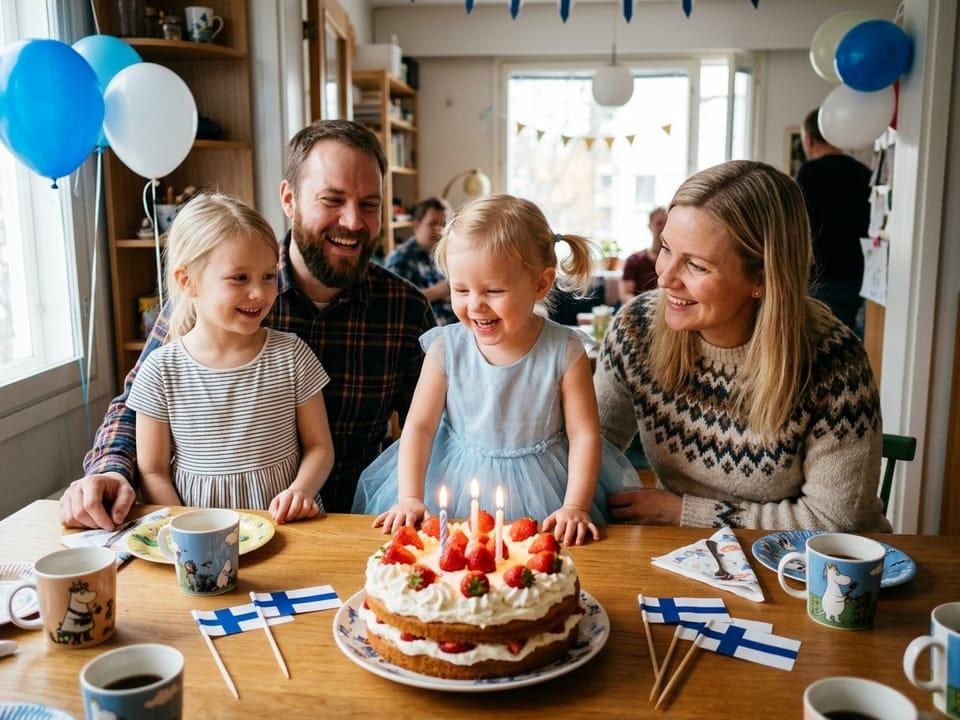
If the session ends with a red-faced baby and no smile, keep that picture. If you'd also like one where everyone looks settled, pokesta can create a birthday family portrait with AI from photos already on your phones, including the happy ones from an ordinary afternoon at home. It's an image made by AI, not a moment from the shoot. You pay $1 per photo and the first is free, so try it with your favourite recent photo of your baby and let the real shoot be whatever your child brings to it.