Eid Photos When Every Park in Cairo Is Packed: First Mornings, Quiet Corners and Home
pokesta Editorial Team · Updated November 4, 2026
On the first day of Eid al-Fitr, Egyptian families head to public gardens together, and Cairo's parks, riverside walks and streets stay busy day and night. The way around the crowds is timing. Take the new-clothes photo at home right after the Eid prayer, before anyone leaves, and save the park for the second or third morning, when the gates have just opened and many families are still at home. If you do go out on the first afternoon, dress the children in something easy to spot and agree on a meeting point before you walk in.
Everyone is off at once, and one old favorite is still closed
The crowds have a simple cause. Eid al-Fitr is a three-day feast, and the government declares its own paid holiday around it. In 2026, a decree by Prime Minister Mostafa Madbouly gave ministries, public bodies and public-sector companies 19 to 23 March off, so a very large number of families were free on the same afternoons. For 2027, Eid is expected around 9 March, but the date depends on the moon sighting announced by Dar al-Ifta, and the holiday decree comes shortly before Eid.
The best-known green spaces then take most of the load. Enterprise's 2025 guide to Cairo's parks notes that Al Horreya Garden tends to get too crowded on public holidays. One traditional outing is still missing from the map: the Giza Zoo was handed over for redevelopment in July 2023, and in August 2026 Egypt Independent reported that its official opening was set for later in 2026, pending approval from the African Association of Zoos and Aquaria. Check the news before promising it to the children.
The new-clothes photo belongs at home, before you go out
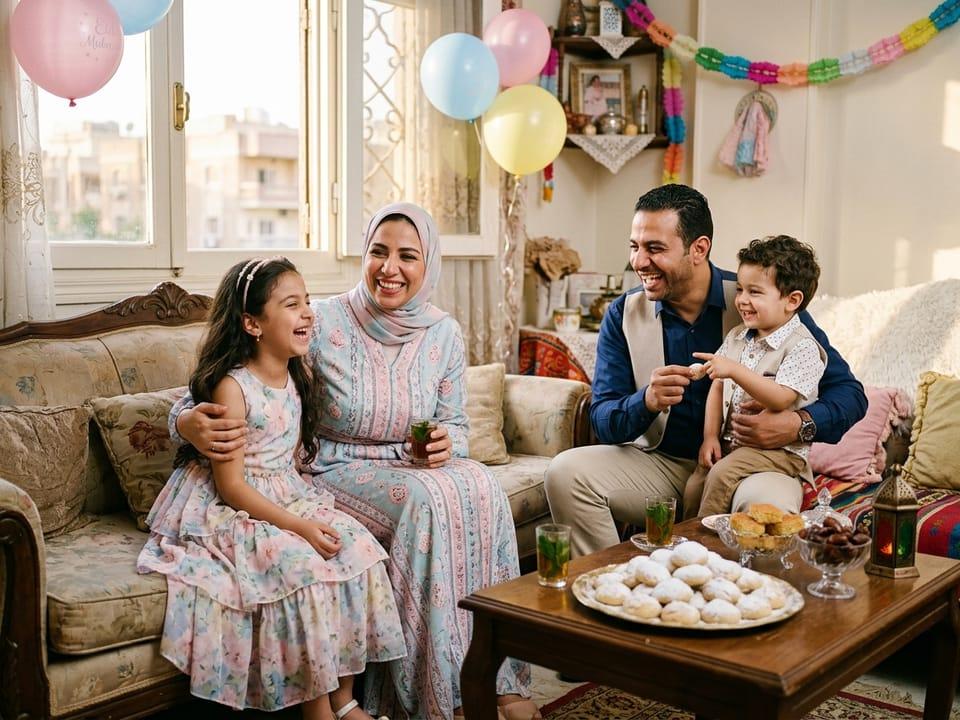
Families come back from the morning Eid prayer with the clothes still uncreased and nobody sticky from sweets yet. That half hour is the best window of the whole holiday for a family photo, and you don't need a park for it. Stand everyone by the largest window or out on the balcony, switch on the room lights, and take a few full-length shots and a few close ones. In early March the sun rises in Cairo a little after 6 am, so by the time you are home from prayer the daylight is already soft and bright.
If your building has a garden, a shared courtyard in a compound or a rooftop, use it before the visits begin. A rooftop in the late afternoon gives you open sky behind the family and no strangers at all; ask the building manager or the neighbors first, and keep children well away from the edge. A tidy stairwell landing with a plant, or a carved wooden front door, also works for a close family shot.
Go to the park on the second or third morning
If you want lawns and the view over old Cairo, go early on the second or third day. Al-Azhar Park opens at 9 am, and Enterprise's September 2025 guide listed entry at EGP 35 per person, or EGP 40 on weekends and public holidays. We couldn't confirm a newer official price, so check at the gate. Morning crowds are thinner, and the light before 11 am is kinder to faces than the midday sun.
Even then, people will walk through the frame. Crouch a little and shoot upward so the sky or the trees fill the background, or stand the family against a hedge or a stone wall. Using the phone's 2x lens from a few steps back narrows the background and keeps passers-by out of focus. Take ten frames instead of two, and keep the one where nobody walked behind you.
In a crowd, plan for losing each other
On the first afternoon, when the crowds peak, the photo matters less than keeping the group together. Dress small children in one bright piece, a red cap or a yellow cardigan, that you can pick out across a lawn. Before you go in, take a full-length photo of each child so you can show exactly what they're wearing if you get separated. Choose a meeting point nobody can miss, such as a particular gate or a fountain, and tell older children to go there and wait. With so many people in one place, calls and messages can be slow to get through, so don't rely on phones alone. A card in each child's pocket with a parent's number costs nothing.
Studios fill first, and photographers face the same crowds
A studio is the only option that guarantees no strangers in the frame, which matters if you want a clean portrait of the children. If you want one for Eid, book before Ramadan ends, because holiday slots go first, and ask what happens if a child is ill on the day. A photographer who meets you in a park brings skill but faces the same crowds you do, and will still push for the early slots. One who comes to the house can catch the visits and the eidiya, which is worth paying for when grandparents and cousins are all under one roof. Your own phone is the most flexible: if the baby falls asleep, you shoot after the nap. Our comparison of studio, outdoor and home Eid photos covers the costs and trade-offs, and the Eid al-Fitr guide covers kahk, eidiya and the felucca.
Take the new-clothes photo before you leave the house
That one habit saves most Eid photos. If the first-morning picture didn't happen, or half the family was elsewhere, pokesta can create an Eid family portrait with AI from each person's ordinary phone photos, set in Al-Azhar Park or on a felucca without the crowds. It is a generated image, not a photo of the day itself, but it can fill the gap. It costs $1 per photo, and your first one is free, so try it with a photo from this week and see how it looks on your family.